Most charger problems give you warning before they become a real failure — the challenge is knowing which signs to take seriously and which ones can wait. Ignoring early warning signs is genuinely costly: unplanned emergency fixes can run up to 300% more than addressing the same issue as routine preventive service. Here’s how to tell the difference between “monitor it” and “call someone today.”
Call a Professional Today: Signs That Can’t Wait
A small set of symptoms should prompt an immediate call, not a “keep an eye on it” approach:
- Any burning smell near the charger, outlet, cable, or electrical panel
- The outlet or charger unit feels unusually hot to the touch, or you notice visible discoloration or scorching anywhere in the setup
- Buzzing or crackling sounds during a charging session — charging equipment should operate quietly, and unusual noise often signals a genuine electrical fault, not just a quirky charger
- Visible physical damage to the cable — cracks, splits, frayed insulation, or flattened sections that could expose internal wiring
- Lights in your home dimming or flickering when the charger starts, or other appliances briefly struggling — this points to your electrical service being undersized for the sudden load, a genuine capacity issue rather than a minor annoyance
- A breaker that trips instantly, every single time you plug in — a strong sign of a ground fault, not simple overload
None of these are “wait and see” situations. A charging system that runs at high current for hours every night doesn’t give a small problem much time to stay small.
Schedule a Repair Soon: Signs Worth Addressing, Not Ignoring
These symptoms aren’t emergencies, but they reliably get worse if left unaddressed:
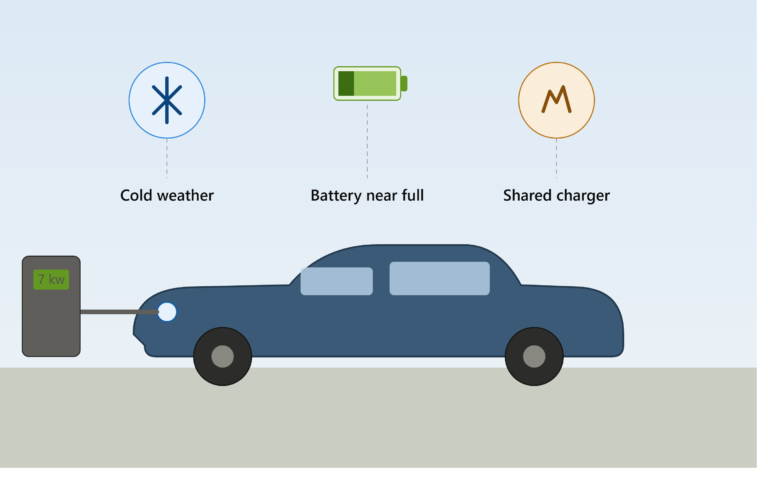
- Charging that’s noticeably slower than it used to be — if a session that used to take 6 hours now regularly takes 9 with no change in weather or battery percentage, something has changed in the system, not just the conditions
- Intermittent charging or frequent connection errors — sessions that stop unexpectedly or a vehicle that displays connection errors partway through, especially if it’s happening consistently rather than as a one-off
- A loose-feeling connector, difficulty getting the plug to lock into the charge port, or visible wear on the connector pins
- The charger repeatedly trips the breaker, even if it resets successfully each time — a pattern of repeated trips indicates an underlying issue even when each individual reset “works”
- Dirt, corrosion, or moisture visible inside the connector — this can be cleaned in early stages, but left unaddressed, contamination affects both connection quality and long-term safety
The Charger Is Completely Unresponsive
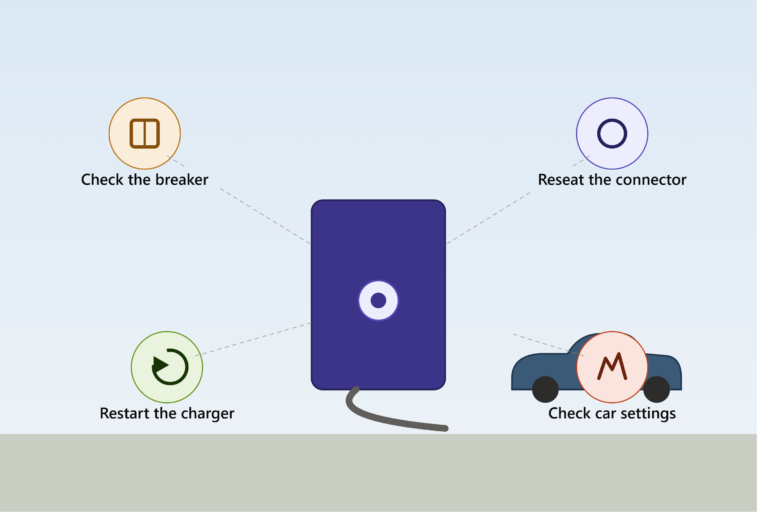
If the unit shows no lights, a blank display, and won’t power on at all even though your home has power, this points to an internal issue — a tripped internal GFCI, a blown fuse, or a more significant internal electrical failure. First, check your home’s breaker box to rule out a simple tripped breaker; if power is confirmed reaching the unit and it’s still completely dead, this requires professional diagnostics rather than continued troubleshooting at home.
Signs Specific to the Cable and Connector
Because the cable is the most physically handled part of the entire system, it fails differently than the charger body itself:
- Visible cracks, splits, or frayed sections in the outer insulation
- Flattened sections, often from being run over or crushed
- Loose connections that require jiggling the plug to get a reliable charge
- Difficulty getting the connector to lock into the vehicle’s charge port
Worn locking pins and damaged connectors specifically manage the communication link between the vehicle and the charger — once that connection degrades, you’ll typically see charging slow down before it stops working entirely, which is why intermittent issues are worth addressing rather than dismissing as a one-time glitch.
Signs That Point to the Original Installation, Not the Charger Itself
Some warning signs aren’t really about the charger wearing out — they’re about the underlying installation never being quite right in the first place:
- Waking up to a partial charge overnight, consistently, suggests your setup isn’t delivering the power you think it is — often because you’re relying on a slower connection than assumed, or your Level 2 charger isn’t getting the full amperage it’s rated for
- A circuit that trips every single time, from day one, rather than developing the problem over time, points toward an undersized circuit for the charger’s continuous draw — a design issue, not a wear issue
- Home lights dimming specifically when the EV starts charging indicates your electrical service itself may be undersized for the added load, which is a capacity problem an electrician needs to evaluate at the panel level, not something the charger itself can fix
If any of these describe your situation from the very first time you used the charger, the original installation is the more likely root cause — worth mentioning specifically when you call an electrician, since it changes what they’ll need to evaluate.
A Quick Reference
| Symptom | Urgency |
|---|---|
| Burning smell, heat, sparking, buzzing | Call today |
| Instant breaker trip, every time | Call today |
| Lights dimming when charging starts | Call today |
| Visible cable damage | Stop using, schedule repair |
| Gradually slower charging | Schedule soon |
| Intermittent connection errors | Schedule soon |
| Charger completely dead, no lights | Professional diagnostics needed |
| Repeated (but resettable) breaker trips | Schedule soon, don’t just keep resetting |
Why Addressing Early Signs Actually Saves Money
Beyond the safety argument, there’s a straightforward financial one: charging problems caught early are typically minor repairs — a connector, a loose terminal, a firmware update. The same underlying issue, left to progress into a full failure, often means a complete unit replacement plus emergency service call rates instead of a scheduled appointment. The 300% cost gap between preventive and emergency repair isn’t a scare tactic — it reflects the real difference between fixing a $50-150 part on your schedule versus an emergency call plus full replacement when the unit finally fails outright.
Bottom Line
Most charger problems announce themselves before they become dangerous or expensive — heat, unusual sounds, visible cable damage, gradually slowing charge times, or a breaker that trips more than once. Treat anything involving heat, smell, sparking, or instant repeated trips as urgent, and don’t let the more gradual warning signs (slower charging, intermittent connections, worn connectors) sit unaddressed simply because the charger still technically works. A licensed electrician or your charger’s manufacturer support line can typically resolve early-stage issues far more cheaply and safely than waiting for a full failure.
This article is for general informational purposes. Any sign of burning smell, heat, sparking, or electrical fault warrants stopping use of the charger and contacting a licensed electrician immediately.