A tripped breaker isn’t a random glitch — it’s your home’s electrical safety system doing exactly what it’s designed to do. The key to fixing it is understanding when it trips, since that timing tells you almost everything about the underlying cause. Here’s how to diagnose it and what’s actually safe to try yourself.
The Most Important Diagnostic Question: When Does It Trip?
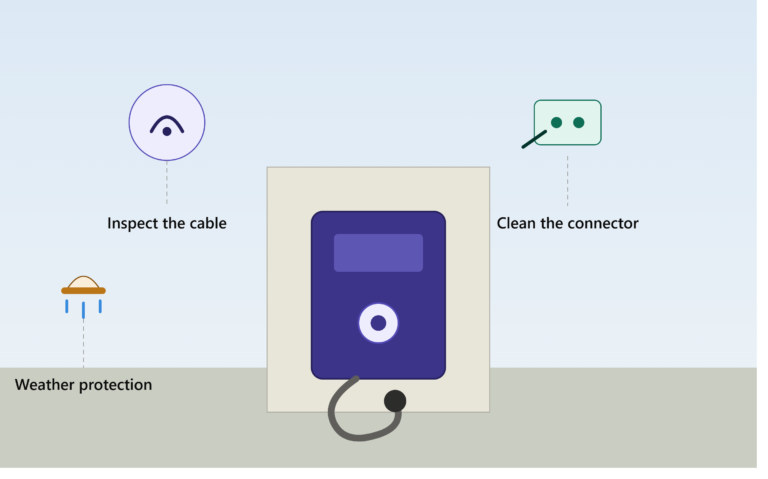
Trips instantly, the moment you plug in, every single time: this points to a ground fault or short circuit — damaged wire insulation, moisture inside the charging port or connector, or a fault within the charger itself. This is the higher-risk scenario and generally requires a licensed electrician, not repeated DIY resets.
Trips after charging normally for 5-15 minutes, or after running for a while: this points to thermal overload from sustained continuous load — the breaker heating up over time until its internal mechanism releases, rather than an instant electrical fault. This is a more common, often more fixable scenario, and the reason comes down to something specific about how EV chargers work.
Why EV Chargers Expose Problems Other Appliances Don’t
Most household appliances draw significant power only briefly — a microwave runs for a few minutes, a dryer cycles on and off. An EV charger pulls hard, continuously, for hours at a stretch. Under the National Electrical Code, this classifies it as a continuous load, which exposes marginal wiring, loose connections, and undersized breakers in a way that shorter-duration appliances simply never test. A connection that was merely a little loose becomes a genuine hot spot under hours of sustained current; a circuit that was borderline adequate becomes genuinely overloaded.
[AD BREAK — insert in-content ad unit here]
The Most Common Causes, Ranked
Based on field data from residential EV charger service calls, the most frequent causes, in descending order of frequency, are:
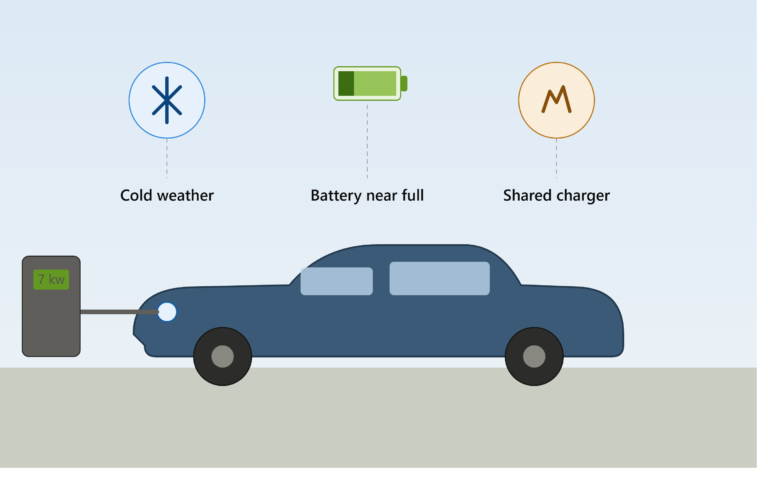
- Circuit overload (the single most common cause) — sharing the circuit with other high-wattage loads like HVAC, an electric dryer, or an oven running at the same time
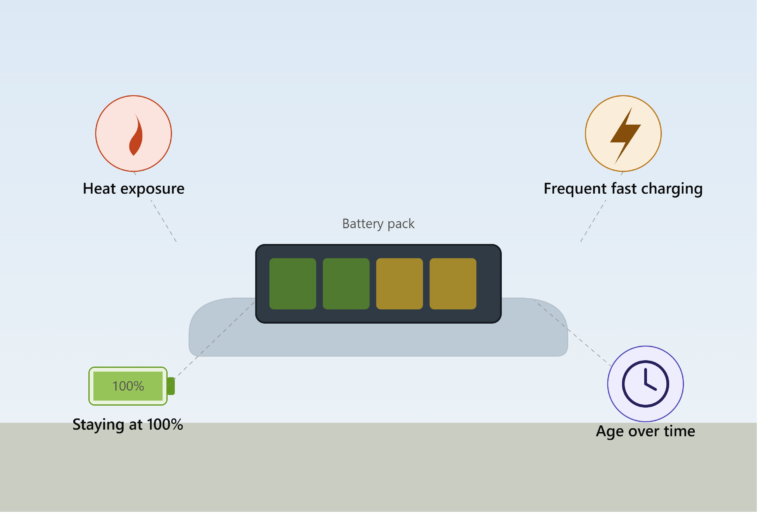
- Breaker aging or thermal fatigue — breakers older than 15-20 years can develop reduced tolerance for sustained loads even if they tested fine when new
- Mismatched breaker and charger amperage — the charger is set to draw more current than the circuit is actually rated to handle continuously
- Wiring or connection issues — loose terminals, undersized wire gauge for the circuit’s rating, or a genuinely faulty connection somewhere in the branch circuit
- Ground faults — often from a weak connection, moisture intrusion, or issues specific to the charger or connector itself
Notably, industry data suggests the large majority of residential cases trace back to improper installation rather than a defective charger — meaning the charger you bought is very often not the actual problem.
What’s Safe to Try Yourself
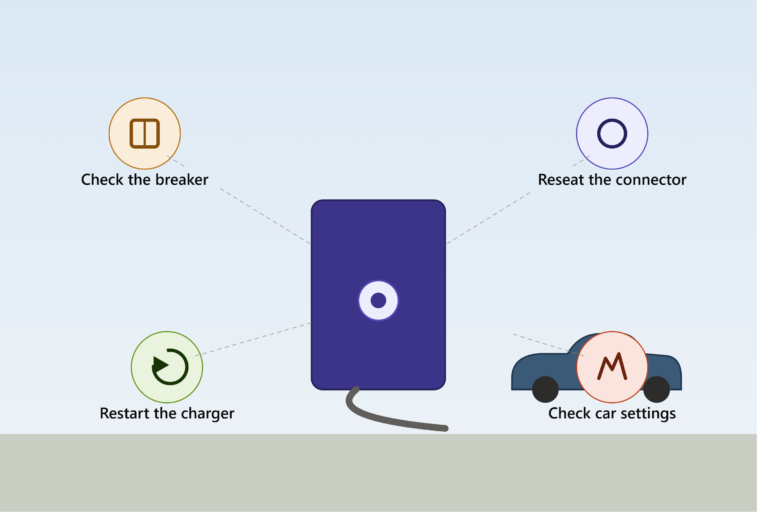
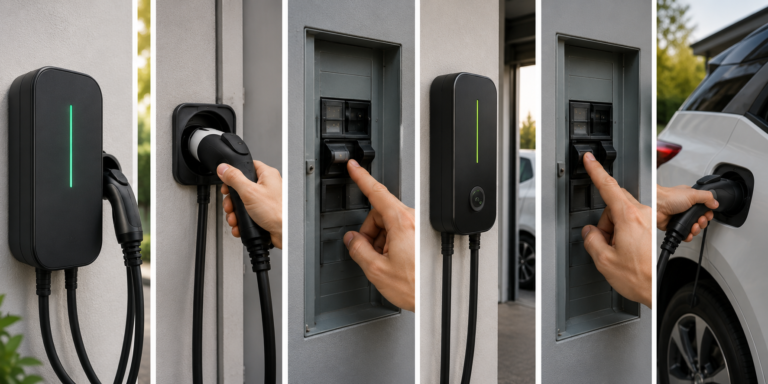
Reset it once to confirm the pattern. A single reset to see whether it trips again, and when, is a reasonable diagnostic step. Do not keep repeatedly resetting a breaker that trips again quickly — this doesn’t fix anything and increases the risk of arcing or heat damage if the underlying cause is a fault rather than simple overload.
Lower the charger’s amperage setting, if it’s adjustable. If your charger allows you to reduce its output (many smart chargers let you do this through an app), dropping from a higher setting — say 40A to 32A, or 32A to 24A — can bring a genuinely overloaded circuit back into a safe operating range and stop the tripping. This is a legitimate long-term fix specifically when the cause is overload, not a temporary workaround to ignore. If the tripping stops entirely at the lower setting and there’s no other sign of a problem (no heat, no smell, no discoloration), this is a reasonable way to keep charging at a safe, reduced speed while you plan any further upgrades.
[AD BREAK — insert in-content ad unit here]
What’s NOT Safe to Try Yourself
Never install a larger breaker to stop the tripping. This is genuinely dangerous, not just a bad idea — the wire gauge feeding the circuit must always be rated to safely handle the maximum current the breaker allows. Installing a bigger breaker without upgrading the wiring to match creates a real fire hazard, since the wire can now carry more current than it’s rated for without the breaker tripping to protect it.
Don’t keep resetting a breaker that trips instantly and repeatedly, especially if it’s a GFCI trip that re-triggers immediately on reset. This pattern points to a genuine ground fault, and repeated resets don’t diagnose or fix it — they just repeatedly stress a circuit that has a real problem.
Is a Weak Outlet the Culprit? (Plug-In Setups)
If you’re using a plug-in Level 2 charger through a NEMA 14-50 outlet rather than a hardwired unit, the outlet itself is worth suspecting. Not every 14-50 installation is equal — some were installed for occasional use (RVs, electric ranges, welders) rather than the sustained, nightly high-current draw of EV charging, and lower-cost receptacles or ones with loose or worn contacts can cause heat buildup that trips the breaker or forces the charger to reduce speed on its own. If nuisance trips continue on a plug-in setup even after other causes are ruled out, switching to a hardwired charger — which eliminates the outlet connection entirely — is sometimes the more durable long-term fix.
When to Stop Troubleshooting and Call an Electrician
Treat these as clear signals to stop resetting and bring in a professional:
- Any burning smell near the panel, outlet, plug, or charger itself
- Visible heat, discoloration, or scorching anywhere in the charging path
- A breaker that trips instantly, every time, regardless of amperage setting
- A GFCI that re-trips immediately after being reset
- Repeated trips that don’t resolve even after lowering the charger’s amperage setting
An electrician can properly determine whether you’re dealing with an overload trip or a GFCI/ground-fault trip, inspect the wiring and receptacle condition, verify the breaker itself hasn’t degraded with age, and confirm whether your panel has adequate spare capacity for the circuit as installed (see our guide on calculating your home’s electrical capacity for more on this).
Bottom Line
A breaker that trips instantly every time points toward a genuine electrical fault and needs professional diagnosis. A breaker that trips after sustained charging usually points toward overload, and lowering your charger’s amperage setting is a legitimate, safe fix if that resolves it cleanly with no other warning signs. Either way, resist the urge to just keep resetting the breaker repeatedly or to “fix” it by installing a larger breaker — both approaches either ignore or actively worsen an underlying problem that a licensed electrician can properly diagnose.
This article is for general informational purposes. Any electrical fault involving burning smells, heat, or repeated instant trips should be evaluated by a licensed electrician before further use.