The short answer: modestly, yes — real estate data points to a 1.5% to 3.5% price premium and homes selling up to 13% faster with a Level 2 charger already installed, compared to similar homes without one. It won’t move the needle like a kitchen remodel, but it’s a genuinely positive, low-cost improvement in the right market. Here’s what the data actually shows and when it’s worth doing purely for resale value.
What the Data Actually Shows
Multiple real estate sources converge on a similar range: homes with a pre-installed Level 2 EV charger sell for roughly 1.5% to 3.5% more than comparable homes without one, and can sell up to 13% faster. Translated into dollars, a U.S. Department of Energy-cited analysis found this typically adds somewhere between $5,000 and $20,000 to a home’s value, depending heavily on the home’s overall price point — the same percentage premium is worth a lot more on a $700,000 home than a $250,000 one.
It’s worth being clear about what this isn’t: an EV charger doesn’t add value dollar-for-dollar the way a major renovation can, and it’s not treated by appraisers the same way a bathroom remodel or finished basement would be. What it does is improve marketability and buyer appeal — attracting more qualified buyers, generating more showing interest, and giving your listing an edge in a market where EV ownership keeps growing.
[AD BREAK — insert in-content ad unit here]
Why Location Matters More Than the Charger Itself
The value premium isn’t uniform across the country — it concentrates heavily in specific markets:
- Metro areas with high EV adoption — Los Angeles, the San Francisco Bay Area, Seattle, Denver, Austin, and D.C. suburbs are specifically cited as markets where EV charging has moved from “nice-to-have” to something buyers actively search and filter for
- Areas where public charging is limited or expensive — a home charger is worth more to a buyer who’d otherwise be relying on inconvenient or costly public options
- Rural areas with abundant public charging access, or low EV adoption generally — the premium shrinks significantly here, and in some cases may not be worth pursuing purely for resale value
If you’re in a market where EV ownership is still uncommon, the honest answer is that a charger is more of a personal convenience investment than a reliable value-add — worth doing if you own an EV yourself, less clearly worth it as a pure resale play.
What Buyers Are Actually Looking For in 2026
The bar for “EV-ready” has risen. Buyers increasingly aren’t just checking whether a charger exists — they’re evaluating how well a home’s overall electrical setup handles EV charging as part of a broader energy picture:
- Level 2 charging capability, not just a basic outlet
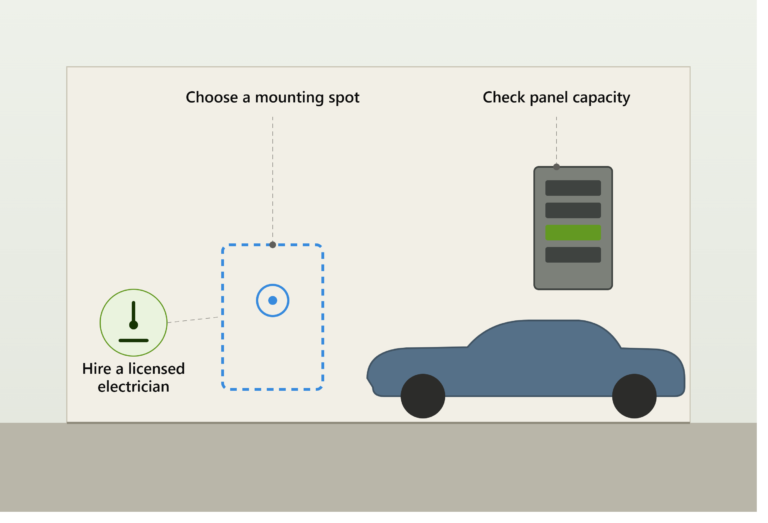
- Panel capacity that can actually support the load without requiring an immediate upgrade
- Smart charging and scheduling features, which signal a more modern, energy-conscious setup
- Increasingly, buyers in higher-end markets are also asking about solar and battery integration alongside charging, treating the whole package as one evaluation rather than separate features
A basic Level 1 outlet or an obviously under-built installation doesn’t carry the same weight as a properly installed Level 2 charger with adequate panel capacity — buyers and their agents are getting more sophisticated about distinguishing genuine EV-readiness from a token gesture.
[AD BREAK — insert in-content ad unit here]
The Over-Improvement Risk
It’s possible to overspend here relative to what the market will actually pay back. High-end charging setups — multiple chargers, an extensive panel upgrade, premium hardware — installed in a lower-priced neighborhood where buyers aren’t specifically shopping for this feature can be a case of over-improving relative to what the local market supports. This mirrors the same logic that applies to kitchen and bathroom renovations: match your investment to what buyers in your specific price point and neighborhood are actually looking for, rather than assuming more is always better.
The Cost-to-Value Math
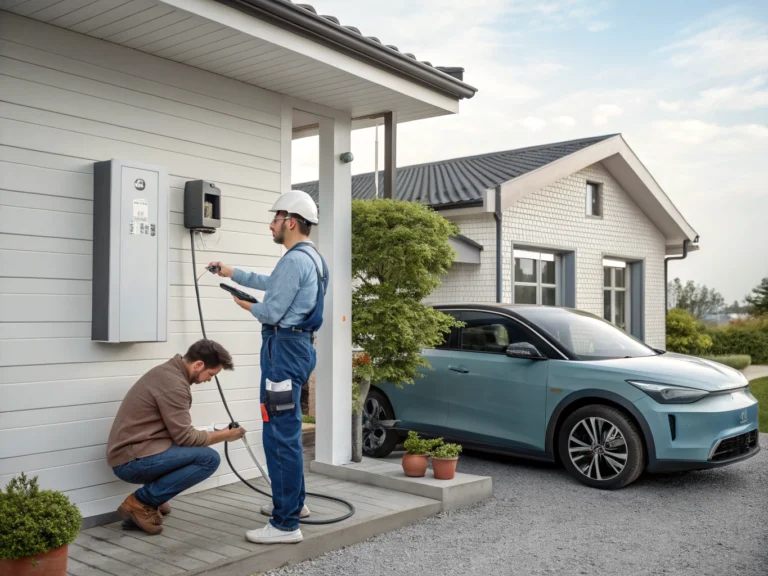
A typical Level 2 home charger installation runs $1,500-2,000 including equipment and labor (see our full guide on installation costs for the detailed breakdown by circumstance). Against a potential $5,000-20,000 value increase, that’s a favorable ratio on paper — but remember this is a range driven heavily by your local market and home price point, not a guarantee. In a strong EV-adoption metro market on a higher-priced home, the math tends to work clearly in your favor. In a market with minimal EV presence, you may not fully recoup the installation cost through resale value alone, even though you’d still benefit from the charger personally if you own or plan to own an EV.
Timing: New Construction and Major Remodels
If you’re building new or doing a significant remodel that already involves opening up walls or upgrading your panel, this is the cheapest point to add EV-ready wiring — roughing in the circuit during other electrical work costs meaningfully less than retrofitting a finished home later. A growing number of builders now include this as a standard offering specifically because it’s a much smaller incremental cost during construction than as a standalone project afterward.
When It Makes the Most Sense
- You already own or plan to buy an EV, so you get the personal charging benefit regardless of resale impact
- You live in or near a metro area with meaningfully growing EV adoption
- Your neighborhood’s typical buyer profile skews toward tech-forward or environmentally conscious purchasers
- You’re already doing electrical work (new construction, panel upgrade, remodel) where adding charger wiring is a small incremental cost
When to Deprioritize It
- You’re in a rural or low-EV-adoption market where buyers aren’t specifically searching for this feature
- Your home needs more foundational updates first (roof, HVAC, basic curb appeal) that have a more reliable return in your specific market
- You’d need a major, expensive panel upgrade solely to support the charger, pushing the cost well above what local buyers are likely to pay a premium for
Bottom Line
Installing a Level 2 EV charger is a modest, genuinely positive value-add for most homeowners — a 1.5-3.5% price premium and faster sale times in markets where EV adoption is real and growing, translating to a favorable cost-to-value ratio in most cases. It’s not a guaranteed dollar-for-dollar return everywhere, and it matters less in rural or low-adoption markets. If you already own or plan to own an EV, the personal charging convenience alone often justifies the cost regardless of what it does for resale — the value premium is simply a genuine bonus on top.
Real estate value premiums vary significantly by local market, home price point, and buyer demand. Figures in this article reflect national aggregated data as of 2026; consult a local real estate agent for guidance specific to your market.