Adding EV charging to a multi-unit building is a genuinely different project than installing a home charger — it involves shared electrical infrastructure, cost allocation among residents who may not all drive EVs, accessibility requirements, and a board approval process. Done right, it’s increasingly treated as a property value investment rather than a favor to one resident. Here’s how the process actually works, whether you’re a board member, property manager, or a resident trying to get the project started.
Start With an Honest Assessment, Not a Purchase
Before anyone discusses equipment or vendors, two things need to happen:
- Survey resident demand — how many current or near-future EV owners actually live in the building, and what’s their expected usage pattern? This shapes how many charging stations actually make sense at launch versus later phases.
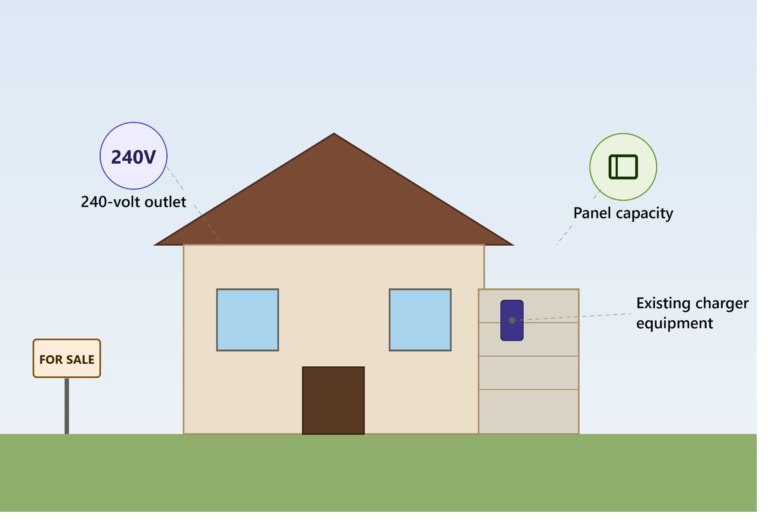
- Run a site electrical assessment — older buildings frequently lack the spare electrical capacity to support multiple Level 2 chargers without real infrastructure work. A proper assessment (not a guess) determines whether you’re looking at a straightforward addition or a genuine capacity project. Panel upgrades or service expansions for buildings can run $10,000-50,000 depending on building size and the age of the existing electrical system — a very different number than a single-family home upgrade, and worth knowing before setting expectations with residents.
Choosing an Infrastructure Model
There isn’t one right approach — the best fit depends on your parking layout and building type:
Individual dedicated circuits (owner-installed, deeded spots): if parking is assigned and deeded to specific units, owners in states with right-to-charge protections can often install their own charger at their own space and cost, similar to a single-family home installation but requiring board approval on aesthetics and process (see our guide on HOA rules and EV chargers for what boards can and can’t require).
Shared stations in common areas: works well when parking isn’t assigned to specific units, since chargers can be placed conveniently near the building’s electrical room rather than scattered across the property. This model requires an access and billing system (below) since multiple residents share the same hardware.
Load management systems: rather than wiring each charging spot for full independent capacity, a load management system dynamically allocates available electrical capacity across active chargers in real time — when multiple vehicles charge simultaneously, each receives automatically reduced power to keep total consumption within the building’s existing infrastructure limits. This is frequently the most cost-effective way to support more charging spots without a full service upgrade, and it’s worth asking any installer specifically whether this is being considered before assuming a full panel upgrade is required.
Accessibility Isn’t Optional
If chargers are being installed as a shared amenity or made available to guests, accessibility requirements are a core design requirement, not an afterthought — and getting this wrong is one of the more common causes of failed inspections or expensive retrofits later. Under local building codes and the Americans with Disabilities Act (ADA), a certain number of charging stations typically must be accessible, with adequate connector reach ranges and unobstructed routes from parking to the charger. Check with your local permitting agency early in the planning process to confirm exactly how many ADA-compliant stations your specific project will require — this is much cheaper to design in from the start than to retrofit after installation.
Solving the Billing Problem
Shared meters are one of the most common stalling points for multi-unit projects: without a way to track individual usage, one resident’s EV charging consumption becomes indistinguishable from general building common-area electricity, which creates an obvious fairness problem. A few approaches solve this:
- Sub-metering — installing metering equipment specifically for the charging stations, allowing usage to be billed back to individual residents or units
- Charging network software (platforms like EVmatch, ChargePoint, or similar) — residents authenticate via an app or RFID card, and the software handles usage tracking, access control, and billing automatically, without adding ongoing administrative work for building staff
- Flat monthly access fee — simpler to administer than usage-based billing, though less precise, and can work well for buildings with a small, predictable number of EV-driving residents
Funding: Check Multifamily-Specific Incentive Programs First
This is a step boards frequently skip, and it can substantially change the project’s cost. Many state and utility programs specifically fund multifamily EV charging infrastructure — often more generously than single-family residential programs, since expanding access to renters and condo owners is frequently an explicit policy priority (we’ve covered several of these programs in our state-by-state incentive guides, including dedicated multifamily tracks in states like New York and Massachusetts). Utilities in some markets also offer free electrical assessments and installation cost support specifically for multi-unit properties — worth checking with your specific utility before assuming the full cost falls on the association or residents.
Build in Phases, Not All at Once
A practical, widely recommended approach: install enough charging capacity to meet current phase-one demand, but design the underlying electrical infrastructure (“make-ready” wiring and panel capacity) to support future expansion without requiring a second full construction project. This avoids both extremes — overbuilding capacity nobody uses yet, and underbuilding in a way that turns future expansion into a much more disruptive and expensive second project.
How to Actually Persuade a Reluctant Board
If you’re a resident trying to get a project started rather than a board member planning one, how you frame the request matters more than most people expect. A common mistake is leading with “it’s my car, I’ll pay for it all myself” — this often backfires because it doesn’t address the board’s actual underlying concerns: fear of parking space conflicts, fire safety anxiety, or setting a precedent they can’t control.
A more effective framing: present EV charging as a property value and marketability investment for the entire building, not a personal favor. Real estate data supports this directly — EV charging infrastructure has been associated with a 3-5% resale value premium in multiple studies, which on a $300,000 unit translates to roughly $9,000-15,000 in added value. Framing the project as “this makes every unit in the building more valuable and marketable” tends to land very differently than framing it as “I need this for my car.”
Bring supporting information rather than just a request: resident demand data if you have it, a rough cost estimate, and information about relevant funding programs your state or utility might offer — this shows the board you’ve thought through their actual concerns, not just your own need.
A DIY Option for a Single Deeded Spot (No Building-Wide Project Required)
If you own a single deeded parking spot with an existing 240V outlet and don’t need or want a building-wide project, a smart splitter device (such as the NeoCharge Smart Splitter) plugs into the existing outlet and shares power between two devices without requiring a permit or contractor — a reasonable option specifically for individual owners who want a personal charging solution without initiating an association-wide conversation at all.
Bottom Line
Adding EV charging to a condo or apartment building is a genuine infrastructure project, not a simple equipment purchase — it requires an honest electrical assessment, a deliberate choice between individual, shared, or load-managed infrastructure, a billing solution for shared stations, and (ideally) funding research before committing costs to residents. Framing the project around building-wide property value, rather than one resident’s personal need, is consistently the more effective way to move a reluctant board toward approval.
This article is for general informational purposes. Consult a licensed electrician and your local building department for requirements specific to your property and jurisdiction.