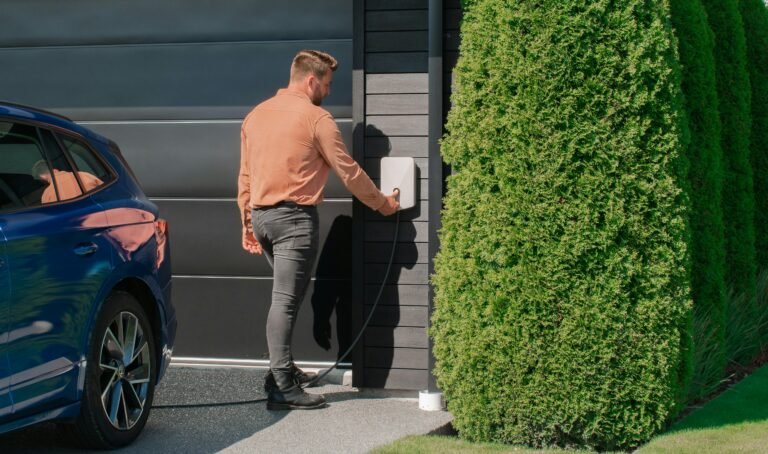
Your HOA almost certainly can’t flatly ban your EV charger — but it can still control quite a lot about how, where, and under what conditions you install one. Whether that’s true for you depends heavily on which state you live in, since this is governed by state law, not a national standard. Here’s what’s actually enforceable and what to expect from the approval process.
The Big Picture: “Right-to-Charge” Laws
As of 2026, roughly 15 states plus Washington, D.C. have enacted some form of right-to-charge law — legislation that prevents HOAs and condo associations from prohibiting residents from installing EV chargers in their own designated parking space. States with clear, well-established statewide protections include California, Colorado, Connecticut, D.C., Illinois, Maryland, Massachusetts, New York, Oregon, Virginia, and Washington, with several additional states (including Florida, Texas, and others) offering some form of protection, sometimes narrower in scope. If your state isn’t on this list, your HOA’s governing documents (CC&Rs) are the only relevant authority, and a blanket denial may be entirely enforceable.
Because exact statute numbers and scope shift as more states pass legislation, don’t rely on a specific citation from any single source, including this one — check your state’s current statute or ask your HOA’s management company directly for the applicable law.
What Right-to-Charge Laws Actually Guarantee
The core protection across most of these laws is consistent: an HOA cannot outright prohibit you from installing an EV charger in your own designated, deeded, or exclusive-use parking space. Several of the stronger versions add more specific protections:
- If installation in your designated space is genuinely impossible or unreasonably expensive, the association may be required to allow installation in a common area for your exclusive use instead
- Associations generally cannot impose rules that discriminate based on vehicle brand or specific charging equipment
- Some states (California among them) have removed a common blocking tactic where HOAs required homeowners to name the association as an additional insured party on their charger’s liability insurance — this requirement can no longer be used to delay or deny installation in states that have banned it
- Several laws include a mandatory response timeline — commonly 60 to 90 days — within which the association must approve or deny a properly submitted request, preventing indefinite delay
What HOAs Can Still Legally Require, Even With These Laws in Place
This is the part homeowners often misunderstand: a right-to-charge law doesn’t mean the HOA loses all authority — it means the HOA can’t say a flat “no.” Courts generally uphold these kinds of conditions as “reasonable restrictions”:
- A formal written application with architectural drawings or a detailed installation plan submitted for board or Architectural Review Committee (ARC) approval before work begins
- Aesthetic requirements — requiring conduit to be painted to match the building, specifying an approved color for the charging unit itself, or requiring a retractable cord/cable management system to keep the installation tidy
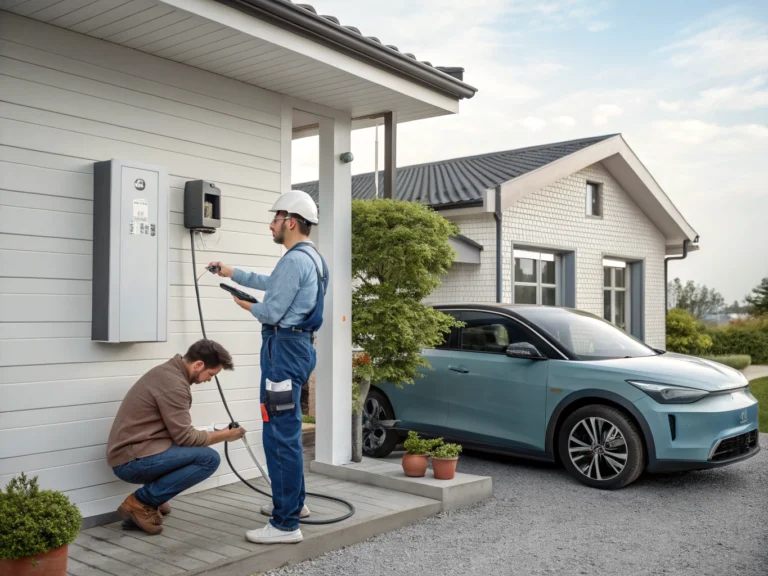
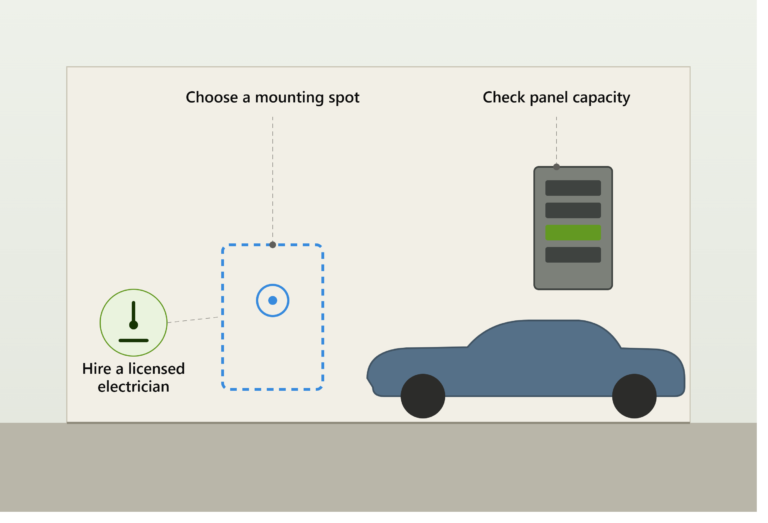
- Proof of a licensed electrician performing the work, with permits and inspection completed
- Reasonable liability insurance requirements on the homeowner’s policy (though not the additional-insured requirement described above, in states that have banned it)
A useful way to think about the line: Maryland’s framework, for example, generally treats a restriction as unreasonable if it significantly increases the installation’s cost or significantly decreases its efficiency. Requiring matching conduit paint is reasonable; requiring the homeowner to personally fund a $50,000 building-wide electrical transformer upgrade just to approve one charger is not, unless the grid genuinely cannot otherwise support it.
California: The Strongest Protections in the Country
California’s law is consistently cited as the most homeowner-favorable in the nation, and it’s worth understanding as a benchmark even if you’re not in California:
- HOAs cannot prohibit EV chargers in a homeowner’s designated parking space
- If that specific space can’t reasonably support installation, the association must allow installation in a common area for the homeowner’s exclusive use instead
- Discriminatory rules based on vehicle type or charging brand aren’t permitted
- A 2026 legal update removed the additional-insured requirement that some associations previously used to slow down or block requests
- Approval requests generally must be addressed within a defined window (commonly cited around 60 days)
- Starting in 2026, new residential construction with parking must include EV-ready infrastructure by code in many California jurisdictions — meaning for new-build HOA communities, this question may already be settled before you even move in
An Important Gap: Most Laws Protect Owners, Not Renters
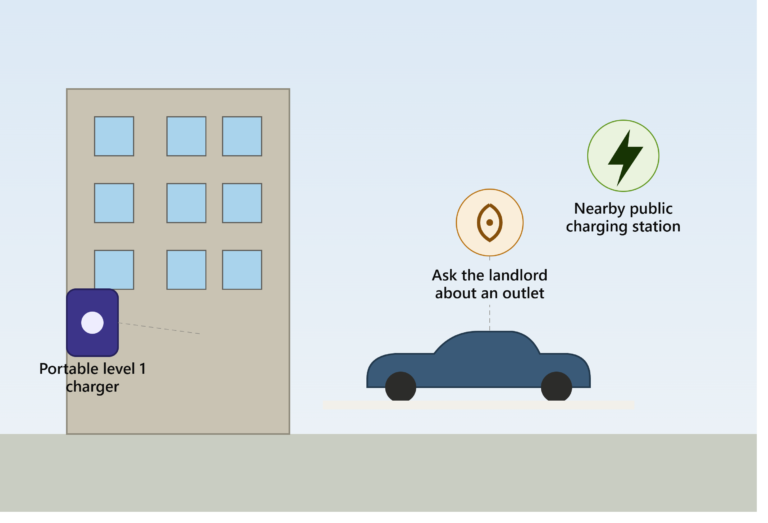
This is worth flagging clearly, since it’s easy to assume a state’s right-to-charge law covers you regardless of ownership status: most of these laws specifically protect unit owners, not tenants or renters. Colorado’s law, for example, explicitly protects owners but does not require associations to permit non-owner renters to install chargers. If you’re renting a unit within an HOA-governed property, your path runs through your landlord’s permission (and, in a smaller number of states, separate renter-specific protections) rather than the HOA law directly — see our guide on renting with an EV for that specific situation.
What to Do in States Without a Right-to-Charge Law
If you’re in a state like Georgia, Michigan, Indiana, or others without statewide protection, your HOA’s CC&Rs are the controlling document, and a denial may not be legally challengeable purely on EV-access grounds. That said, a few things are still worth doing:
- Submit a formal request anyway — many boards will approve individual, reasonable requests even without a legal requirement to do so, especially framed as a modest, homeowner-funded modification rather than a demand
- Propose the same kind of “reasonable” conditions described above proactively (matching aesthetics, licensed installation, your own insurance) — making it easy to approve increases your odds even without legal leverage
- Check whether your specific CC&Rs are silent on EV charging entirely — many governing documents predate widespread EV adoption and simply don’t address it, which sometimes means there’s no explicit prohibition to work around in the first place
A Practical Approval Process (Regardless of State)
- Check your state’s current right-to-charge status before assuming either full protection or none
- Review your specific CC&Rs and architectural guidelines for any existing EV-specific provisions
- Submit a complete, formal written request — including your installer’s credentials, a basic installation plan, and proposed aesthetic details (conduit routing, unit color/placement)
- Note your state’s response deadline, if one exists, and follow up in writing if the board doesn’t respond within it
- Keep all correspondence in writing — email rather than verbal conversations, so you have documentation if a dispute arises later
Bottom Line
Whether your HOA can block your EV charger depends almost entirely on your state’s law, not just your HOA’s own rules — roughly 15 states plus D.C. now guarantee some form of right to install, though the association typically retains real authority over aesthetics, process, and reasonable conditions. Check your specific state’s current statute, submit a complete and well-documented request regardless of where you live, and don’t assume either full protection or a flat “no” without actually checking the law that applies to your address.
This article is for general informational purposes and is not legal advice. Right-to-charge laws change as more states adopt legislation — confirm your specific state’s current statute or consult an attorney for guidance specific to your situation.