The real-world data is more reassuring than most people expect: the largest recent study of EV battery health, covering over 22,700 real-world vehicles, found batteries retain an average of 81.6% of their original capacity after 8 years. Degradation is real, but it’s gradual, mostly predictable, and meaningfully within your control. Here’s what actually drives it and what genuinely helps.
What Battery Degradation Actually Is
Degradation is the slow, permanent decline in a battery’s ability to store energy — think of it like a fuel tank that gradually shrinks over years, not a switch that suddenly fails. A battery rated for 300 miles when new might deliver closer to 240-260 miles after a decade, not because anything broke, but because of ordinary chemical changes inside the cells. Critically, degradation doesn’t mean your EV stops running — it means your range gradually declines while the car otherwise continues to function normally.
The Real Numbers (2026 Data)
According to Geotab’s January 2026 update — analyzing a large real-world fleet dataset — the average annual degradation rate is about 2.3% per year, up from 1.8% in their 2024 study. The increase is attributed to a larger dataset and a genuine shift in usage patterns, particularly a rise in fast-charging frequency across the fleet. Even so, at that rate, an EV rated for 300 miles new would still be delivering roughly 238 miles after a full decade — a meaningful but very livable decline, and one that varies significantly by model, climate, and how the car is charged and driven.
[AD BREAK — insert in-content ad unit here]
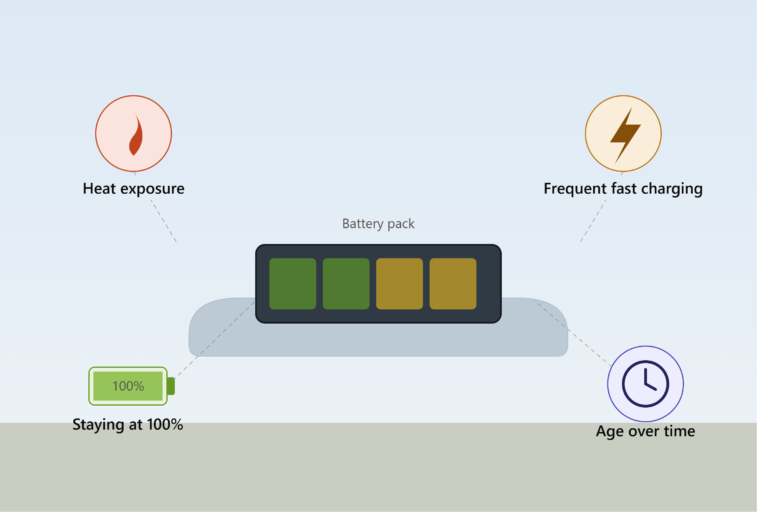
The Four Main Factors That Drive Degradation
1. Heat (The Biggest Factor)
Heat is consistently identified as the single most significant driver of long-term battery aging. High ambient temperatures accelerate the chemical side reactions inside the cells that cause degradation, even when the car isn’t being driven — this happens whether the battery is in active use or just sitting parked in a hot climate. Most modern EVs actively heat or cool the battery pack to manage this, which uses a small amount of energy but meaningfully supports long-term health.
What helps: park in a garage or shaded area when possible, and use your vehicle’s battery preconditioning feature if it has one, especially before fast charging or in extreme weather.
2. Fast Charging (A Real but Often Overstated Risk)
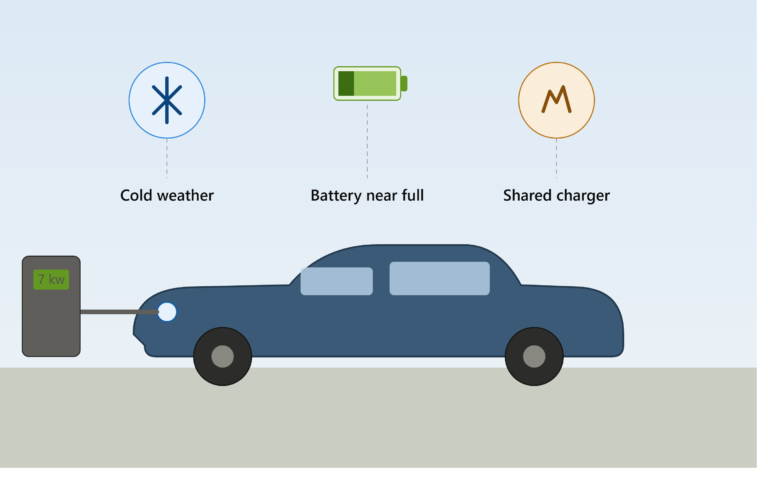
Frequent high-power DC fast charging generates more heat and higher internal currents than slower Level 1/Level 2 charging, and large real-world datasets consistently show it as a meaningful contributor to increased average degradation. That said, some recent research suggests modern EVs with sophisticated battery management systems handle occasional fast charging better than earlier models did — the concern is specifically about relying on it as your primary, daily charging method, not using it occasionally for road trips.
What helps: use the lowest charging power that still meets your actual needs day to day. Level 2 home charging is gentler and entirely sufficient for most daily driving; reserve DC fast charging for road trips or genuinely time-sensitive situations rather than routine use.
3. Charging Habits: Deep Discharge and High State of Charge
Consistently letting the battery run down near 0%, or consistently charging it to 100% and leaving it there, both add unnecessary stress to the cells. Lithium plating — a permanent form of cell damage — can occur specifically from charging at low temperatures or high charge rates, and cannot be reversed once it happens.
What helps: the single most impactful habit most owners can adopt is keeping daily charging between roughly 20% and 80%, reserving a full charge to 100% only for long trips where you need the extra range. Most modern EVs let you set this charging limit directly in the vehicle’s settings or app, so it happens automatically without requiring you to remember to stop charging manually.
[AD BREAK — insert in-content ad unit here]
4. Calendar Aging (Happens Regardless of Use)
Here’s a detail that surprises a lot of owners: a battery degrades somewhat even if the car is never driven, simply because time passes. This is called calendar aging — slow chemical side reactions inside the cells that consume some of the lithium ions and electrolyte needed for capacity, independent of actual driving or charging cycles. For a car driven a moderate amount daily, calendar aging and use-based (“cycle”) aging typically contribute roughly equally to total degradation; for a very high-mileage vehicle (like a taxi or fleet car), cycle aging dominates instead.
What helps: if you’re storing an EV for an extended period (weeks or longer) without driving it, target a 40-60% state of charge rather than leaving it at 100% or letting it drop to near-empty, and park it in a cool, shaded location if possible. A battery stored at 50% in a cool garage ages slowest; one stored at 100% in a hot parking lot ages fastest.
Driving Style Matters Too, Modestly
Aggressive acceleration and sustained high speeds increase strain on the battery beyond what more moderate driving does, and some owner data suggests smoother, more conservative driving correlates with somewhat slower long-term degradation, on top of the more obvious benefit of better energy efficiency and range per charge. This is a smaller factor than heat, fast charging, or charge-level habits, but it’s a genuine contributor worth knowing about.
A Quick Reference: What Actually Moves the Needle
| Factor | Impact | What helps |
|---|---|---|
| Heat exposure | Adds ~0.2-0.5%/year | Park in shade/garage, use preconditioning |
| Frequent DC fast charging | Adds ~0.2-0.4%/year beyond occasional use | Use Level 2 for daily charging |
| Regularly charging to 100% / deep discharge | Meaningful cumulative stress | Keep daily charging in the 20-80% range |
| Calendar aging (time itself) | Constant, unavoidable baseline | Store at 40-60% SoC if parked long-term |
| Aggressive driving | Modest additional contributor | Smoother acceleration, moderate speeds |
The Reassuring Bottom Line on the Data
Real-world fleet data consistently shows outcomes better than the pessimistic degradation stories that circulate online: most EV batteries retain 80-90% of original capacity after 100,000 miles or roughly 8 years, and Tesla’s own fleet data has shown averages around only 12% degradation at 200,000 miles. Manufacturer battery warranties commonly guarantee a capacity floor (often 70%) over 8 years or 100,000-120,000 miles, and most vehicles in real-world data comfortably outperform that warranty threshold rather than approaching it. Outright battery replacement due to degradation remains genuinely uncommon within a normal ownership period.
Bottom Line
Battery degradation is real, gradual, and happens to every EV — but it’s meaningfully within your control. The highest-leverage habits are keeping daily charging in the 20-80% range, using Level 2 charging as your default rather than relying on DC fast charging day to day, and minimizing prolonged heat exposure when you can. None of these require significant effort or sacrifice, and following them can meaningfully extend how long your battery performs close to its original capacity.
Battery degradation varies by specific vehicle, battery chemistry, climate, and usage pattern. This article reflects aggregate real-world fleet data as of 2026; check your specific model’s warranty terms and any manufacturer-specific charging guidance for details relevant to your vehicle.