Scheduled charging simply means telling your car or charger to start (or wait to start) at a specific time, instead of drawing power the instant you plug in. Combined with a time-of-use electricity plan, this one setting change can save most EV owners $300-$960 a year — and it takes about five minutes to set up. Here’s how it works and how to actually configure it.
What “Off-Peak” Means
Many utilities charge different rates depending on the time of day, under what’s called a time-of-use (TOU) plan. Electricity typically costs the most in the early evening, when overall demand peaks (people cooking dinner, running AC, coming home from work), and the least late at night, when demand drops off.
Real examples from 2026 utility rate plans show just how big that gap can be:
- PECO (Pennsylvania): $0.32/kWh on-peak (2-6 PM) vs. $0.053/kWh super off-peak (midnight-6 AM) — roughly a 6x difference
- SDG&E (California): ~$0.66/kWh on-peak (4-9 PM) vs. $0.18/kWh super off-peak (midnight-6 AM) — a 3.7x difference
- PG&E (California): peak period 4-9 PM, with meaningfully cheaper rates the rest of the day
The exact hours and rates vary by utility and even by specific plan, but the pattern is consistent: charging overnight instead of right when you get home can cut your electricity cost for that charge by half or more.
Why Level 2 Matters Here
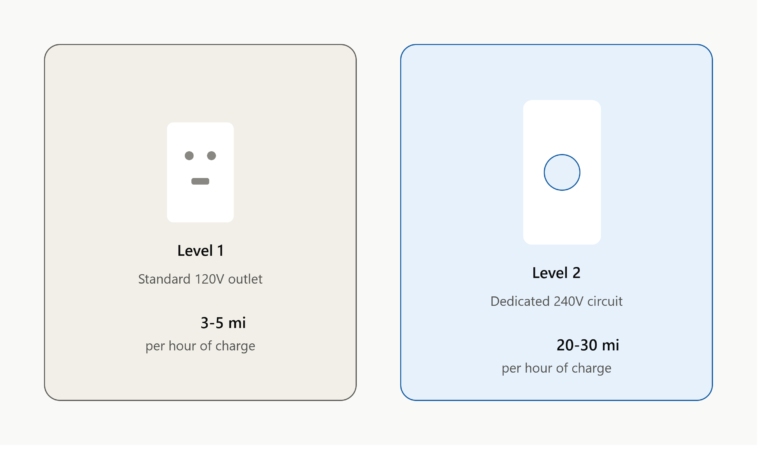
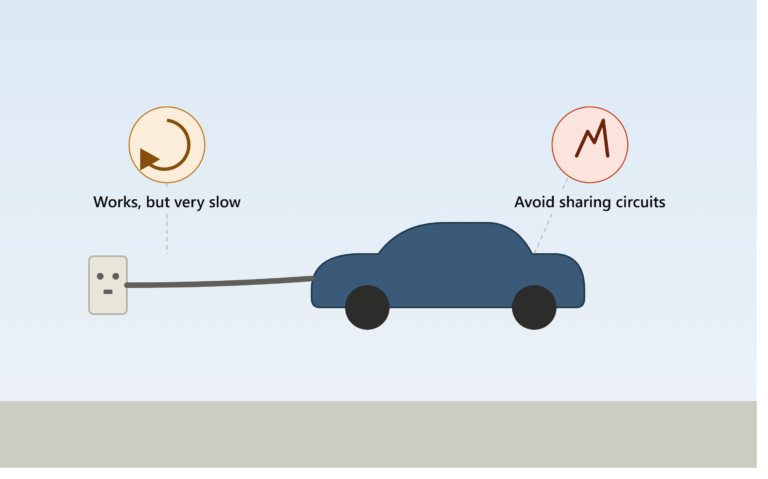
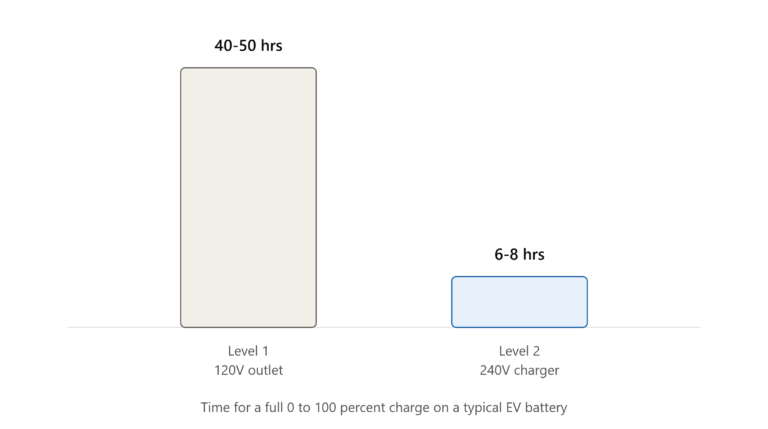
This is where charging speed and off-peak savings connect directly. Off-peak windows are often just 6-8 hours long (commonly midnight to 6 AM, though this varies). A Level 2 charger can comfortably complete a full charge within that window. Level 1 charging often can’t — at 3-5 miles of range per hour, a full charge can take well over 40 hours, meaning a meaningful chunk of your charging spills into more expensive daytime hours no matter how you schedule it. If you’re on a TOU plan, this is one of the strongest practical arguments for upgrading to Level 2.
How to Set Up Scheduled Charging
Most modern EVs and smart chargers offer scheduling built into their app — this is usually the easiest and most reliable method:
- Check if your car has native scheduling. Most EVs let you set either a specific start time or a “ready by” departure time, and the car calculates backward to start charging at the optimal moment. In Tesla’s app, for example, this is under Charging → Schedule.
- Or use your charger’s app, if you have a smart Level 2 charger. Many let you input your utility’s specific off-peak hours once, and the charger handles scheduling automatically from then on — including adjusting if your utility changes seasonal rates.
- Confirm your utility’s actual off-peak hours. Don’t assume — rates and windows vary significantly by provider, region, and season. Check your utility’s website or your Electricity Facts Label for your specific plan’s hours.
- Set a “ready by” time that fits your routine, rather than an exact start time, if your app supports it. This lets the system optimize automatically rather than you guessing the ideal start hour.
Check Whether Your Utility Offers an EV-Specific Rate Plan
Beyond standard TOU rates, a growing number of utilities offer plans designed specifically for EV owners, sometimes with a steeper discount during overnight “super off-peak” hours than their general TOU plan provides. These often require:
- A smart meter (most homes already have one)
- In some cases, a dedicated sub-meter for the charging circuit specifically
It’s worth a quick call to your utility or a look at their EV rate plan page — the difference between a standard rate and an EV-specific plan can be significant, and enrollment is usually free.
A Few Things That Can Reduce Your Savings
Scheduled off-peak charging isn’t automatically a win in every situation:
- Unpredictable schedules: if you frequently need an emergency mid-day top-up, those occasional peak-rate sessions can offset a chunk of your accumulated savings.
- High household evening usage: if your home is already running significant load during peak hours (electric heat, cooking, other major appliances), some TOU plans push your entire household — not just EV charging — into higher-tier pricing. It’s worth checking whether switching plans affects your whole bill, not just your car.
- Renters and apartment dwellers: standard EV rate plans typically require a dedicated meter for the charging location, which is uncommon in multi-unit buildings. This remains one of the more significant gaps in EV charging affordability as of 2026, though some utilities are piloting programs aimed at multifamily housing.
Bottom Line
If you have a Level 2 charger and your utility offers time-of-use rates, scheduled overnight charging is close to a no-brainer: it typically takes one five-minute setup in your car or charger’s app, and the ongoing savings — often $300-$960 a year — come with essentially no downside for most households. The bigger question worth double-checking is whether your specific utility offers an EV-only rate plan that beats their standard TOU option, since that gap can be substantial.
Utility rates, off-peak windows, and EV-specific plans vary by provider, region, and season, and can change during the year. Confirm current details directly with your utility before enrolling in a rate plan.