Most home charging mistakes aren’t about doing something dangerous — they’re about habits carried over from gas cars that don’t quite translate, or details nobody mentioned before the charger showed up. Here are the ones that trip up new owners most often, and the simple fix for each.
1. Charging to 100% Every Single Time
Coming from gas cars, “more is safer” feels intuitive — a full tank never hurt anything. But EV batteries don’t work the same way. Charging to 100% regularly, and especially leaving the car sitting at 100% for long periods, adds unnecessary strain compared to keeping daily charging in a lower range. Most manufacturers recommend a daily charging limit well below 100% for routine driving, saving a full charge for the occasional long trip. Check your specific vehicle’s recommendation — it’s usually in the owner’s manual or charging settings — instead of assuming full is always better.
2. Delaying Level 2 Installation and Living on a Wall Outlet Longer Than Planned
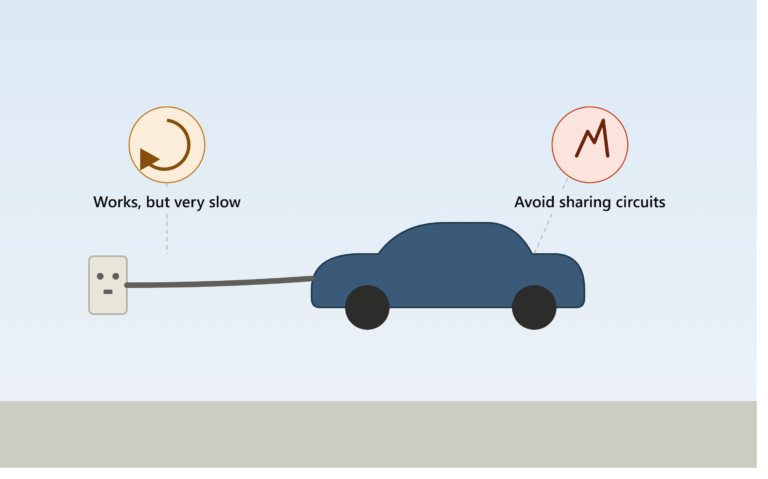
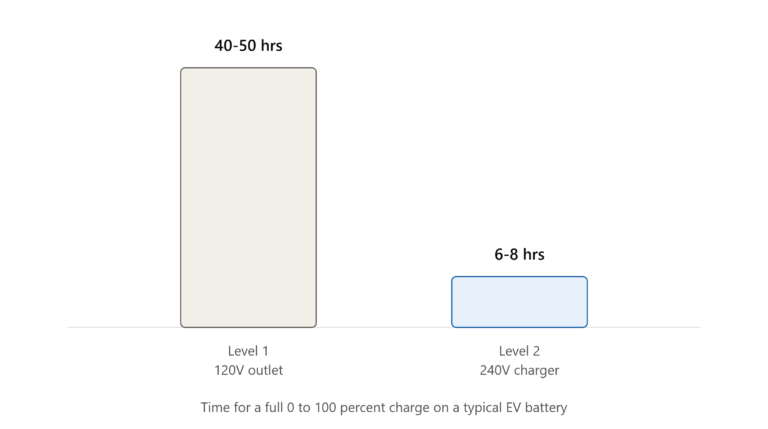
A lot of new owners plan to “get a real charger installed eventually” and end up putting it off for months, relying on the slow trickle of a standard wall outlet the whole time. That works fine for very low mileage, but most people underestimate how often 3-5 miles of range per hour won’t keep up with their actual daily driving — leading to a stressful discovery that the car isn’t as charged as expected on a morning that matters. Figure out your realistic daily mileage in the first couple of weeks, and treat the Level 2 decision as something to resolve early, not indefinitely.
3. Assuming Any Wall Outlet Will Do
It’s technically possible to plug into any 120V outlet, but not every outlet is a good idea for regular, continuous overnight charging. Old, shared-circuit, or poorly maintained outlets can overheat under the sustained draw EV charging creates — something a lamp or phone charger never tests. Before relying on an outlet regularly, check its condition and ideally confirm it’s on a dedicated circuit (we cover exactly what to look for in our guide on charging from a regular outlet).
4. Skipping Off-Peak Scheduling
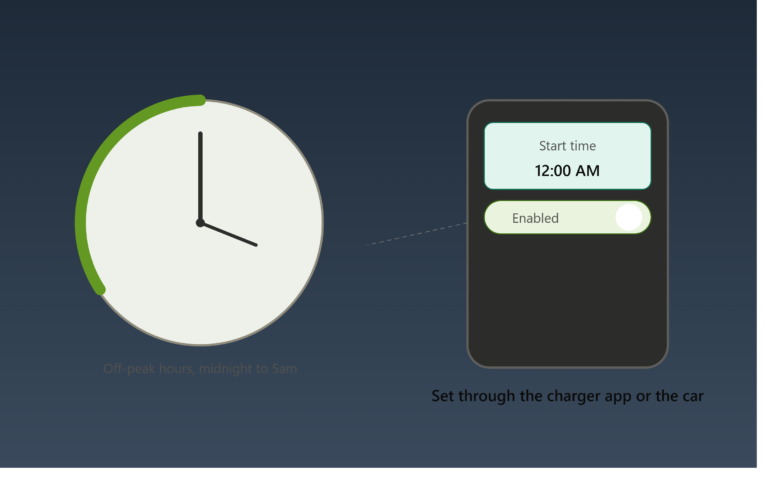
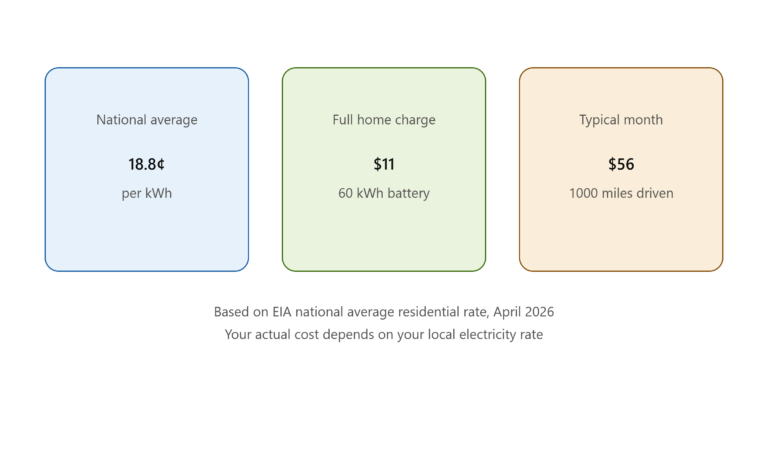
Plugging in the moment you get home, out of habit, is one of the easiest ways to quietly overpay every month. If your utility has time-of-use rates — and most now do — charging overnight instead of at 6 PM can cut your electricity cost for that session by half or more. Setting up scheduled charging in your car’s or charger’s app takes about five minutes and, once done, requires no ongoing effort (see our full guide on off-peak charging setup for the exact steps).
5. Relying Too Heavily on Public Fast Charging
Public DC fast charging is genuinely useful for road trips, but some new owners lean on it for everyday charging simply because it’s fast and doesn’t require thinking ahead. Two problems with that habit: it costs significantly more per kWh than home charging, and frequent high-power fast charging generates more heat than slower Level 2 charging, which several manufacturers explicitly note isn’t ideal for long-term battery health if it becomes a daily routine rather than an occasional convenience. Home charging covers over 80% of typical EV charging for a reason — it’s cheaper and gentler on the battery.
6. Not Planning Where the Charger Actually Goes
It’s tempting to tuck the charger in the most visually discreet spot in the garage. The problem shows up later: if the cable barely reaches your charging port with your current car, it may not reach at all if you switch vehicles down the road, since charging port locations vary by manufacturer (front, rear, or side). A cable under constant tension also wears out faster and can become a trip hazard. Plan the mounting location around comfortable reach and cable slack, not just aesthetics.
7. Buying a Charger Without Checking Your Car’s Actual Charging Limit
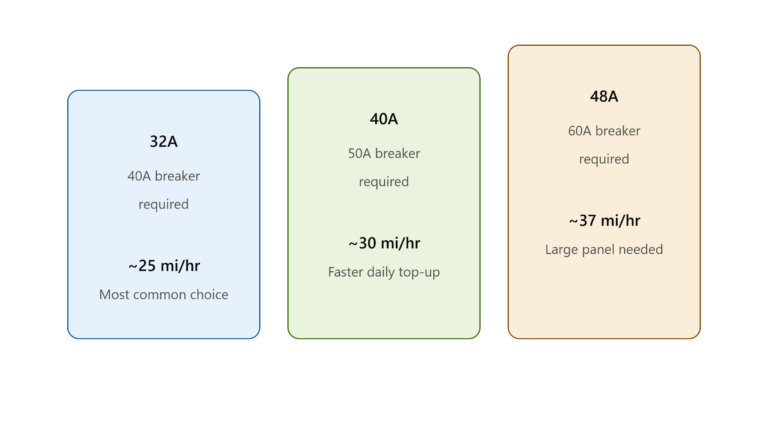
It’s easy to assume a more powerful, more expensive charger automatically means faster charging. In reality, your vehicle’s onboard charger sets a hard ceiling — a car limited to 32A or 7.2 kW will charge at that rate no matter how much more powerful the wall unit is. Check your owner’s manual for your car’s maximum AC charging rate before buying, so you’re not paying for capacity that goes unused.
8. Buying an Unverified “Cheap” Charger
A recurring pattern among first-time buyers: picking the least expensive charger from an unfamiliar online marketplace to save money upfront. The risk isn’t just charging speed — it’s build quality and safety certification on a device that runs high current for hours every night. Stick to established brands with UL certification (or your local equivalent) rather than the cheapest listing you can find.
9. Not Planning Charging Strategy Before the Car Arrives
Some people buy the EV first and figure out charging logistics afterward, which tends to create avoidable stress in the first few weeks. Knowing where you’ll charge day-to-day — home, workplace, or a reliable nearby public option — before the car shows up removes most of the guesswork that makes early EV ownership feel harder than it needs to be.
Bottom Line
None of these mistakes are dangerous or expensive to fix — they’re mostly habits and assumptions carried over from gas car ownership that don’t quite apply to EVs. Get the charging level right for your actual mileage, set up scheduling once, keep daily charging below 100%, and confirm your outlet or charger setup is appropriate for continuous overnight use, and you’ll avoid the vast majority of what trips up new owners in their first few months.
This article is for general informational purposes. Always consult your vehicle’s owner’s manual and a licensed electrician for guidance specific to your car and home.