Home charging is cheaper — often dramatically so. Depending on which type of public charging you compare against, home charging typically costs 3-5 times less per kWh, translating to hundreds or even over a thousand dollars in savings per year. Here’s the real breakdown, including the specific situations where public charging still makes sense despite costing more.
The Rate Comparison
| Charging type | Typical rate (2026) |
|---|---|
| Home (standard residential rate) | $0.15-$0.20/kWh |
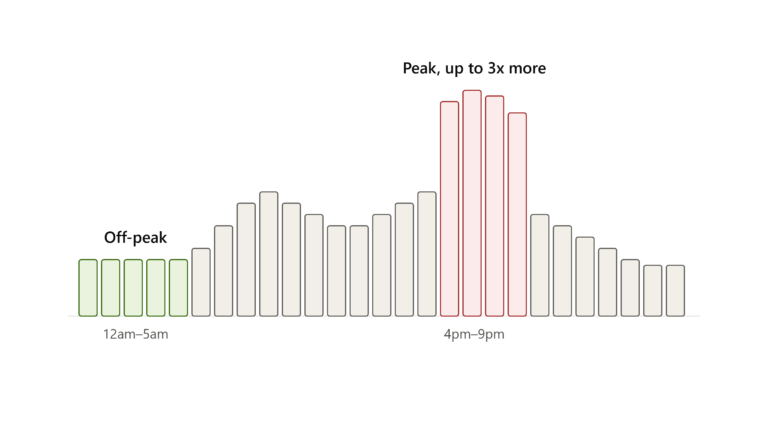
| Home (off-peak/TOU rate) | $0.08-$0.12/kWh |
| Public Level 2 | $0.25-$0.40/kWh |
| Public DC fast charging | $0.35-$0.60/kWh, higher at peak-demand locations |
The gap between the cheapest and most expensive options in this table is roughly 5-6x — meaning where and when you charge matters as much as how much you drive.
What This Looks Like in Real Monthly Costs
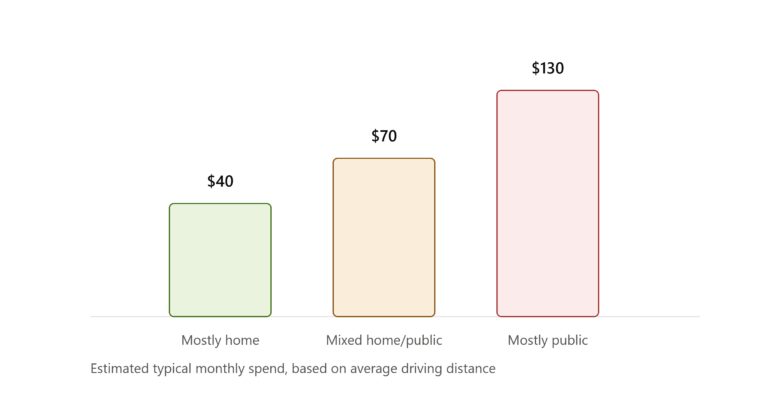
For a driver covering 1,000 miles a month in a reasonably efficient EV:
- Home charging (standard rate): roughly $55-70/month
- Home charging (off-peak rate): roughly $35-50/month
- Public Level 2 charging: roughly $110-160/month
- Public DC fast charging: roughly $140-200/month
For comparison, a gas vehicle covering the same distance at 25-30 MPG and current gas prices runs roughly $115-130/month. That comparison is important: relying primarily on public charging can end up costing as much as or more than gasoline, erasing the fuel-cost advantage that’s usually one of the biggest reasons people switch to an EV in the first place.
The Annual Savings Add Up Fast
Comparing home charging to each alternative over a full year, for a typical driver:
- Vs. public Level 2 charging: roughly $650-800/year saved by charging at home
- Vs. DC fast charging: roughly $900-1,100/year saved
- Vs. gasoline: roughly $950-1,100/year saved
- Off-peak home charging adds another $100-200/year in savings on top of standard home rates
Over a five-year ownership period, home charging at a standard rate saves roughly $1,900-3,900 compared to gasoline; charging on off-peak rates pushes that toward $4,800-6,800. Public Level 2-only charging, by contrast, saves little to nothing over gasoline once you account for the rate gap.
Watch Out for Subscription Plans and Hidden Fees
Several public networks offer membership plans that lower the per-kWh rate — but they only pay off at a certain usage level:
- Electrify America Pass+ and similar $4-13/month subscriptions typically deliver meaningful savings only if you’re fast-charging 6 or more times per month. Below that, the pay-as-you-go rate is usually the better deal.
- Idle fees are a real cost many owners overlook: some networks charge $0.10-0.20 per minute if you don’t unplug promptly after your session completes, which can add up quickly if you leave your car parked at a fast charger longer than necessary.
- Non-Tesla vehicles using Tesla’s network via NACS typically pay the same rates as Tesla owners at most locations, though not every station currently supports non-Tesla vehicles — check compatibility before routing to a specific station.
When Public Charging Still Makes Sense
Despite the cost gap, public charging isn’t something to avoid entirely — it fills specific, legitimate roles:
- Road trips, where DC fast charging along highway corridors is the only practical option for covering long distances
- No home charging access — renters or those without a dedicated parking spot may rely on public charging by necessity, not preference (see our guide on charging options for renters and apartments)
- Occasional top-ups when you’re out and unexpectedly low on range, where the convenience outweighs the cost premium for a single session
Don’t Forget the Time Cost
Cost per kWh only tells part of the story. A public charging session typically involves driving to the station, potentially waiting for an available charger, and monitoring the session — time that home charging simply doesn’t require, since it happens overnight while you sleep. Some analyses estimate avoiding 24-39 hours a year at public stations is worth roughly $700-900 if you value your time at a typical hourly rate, on top of the direct cost savings.
The Bottom Line on Payback
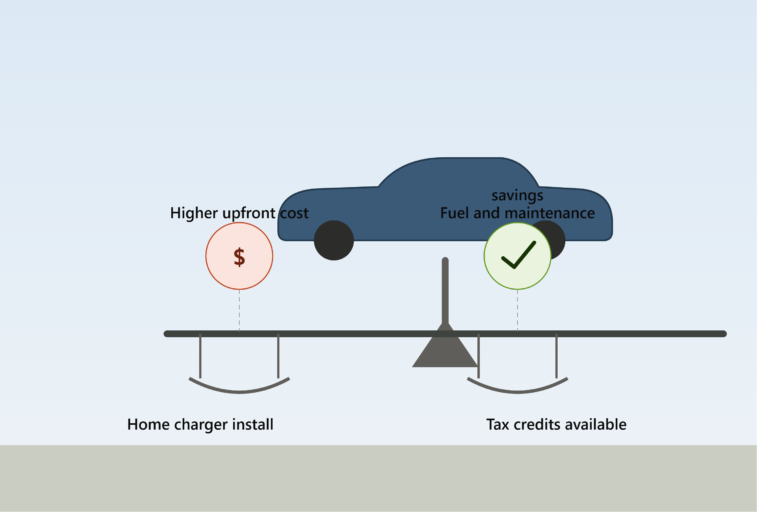
For most households, this comparison is also the strongest argument for installing a home Level 2 charger in the first place: a typical installation costs $800-2,000, and the ongoing savings versus relying on public DC fast charging alone ($600-1,200/year) mean many installations pay for themselves within 1-3 years on charging costs alone — before even factoring in the time saved.
Bottom Line
Home charging is consistently the cheaper option, often by a wide margin, and the gap only grows if you have access to off-peak utility rates. Public charging remains genuinely useful and sometimes necessary — road trips, no home access, emergency top-ups — but treating it as your primary charging method rather than an occasional supplement can erase most or all of the cost advantage that makes EV ownership cheaper than gas in the first place.
Electricity and public charging rates vary significantly by region, network, and time of use, and change frequently. Figures in this article reflect national averages as of mid-2026.