Switching to an electric vehicle is one of the biggest financial decisions many drivers make in a decade. It is not just about the sticker price. It is about how that price compares, over years of ownership, to what you would have spent on a gas car. This guide breaks down the real costs and the real benefits, so you can decide with clear numbers instead of guesswork.
The upfront cost: higher, but shrinking
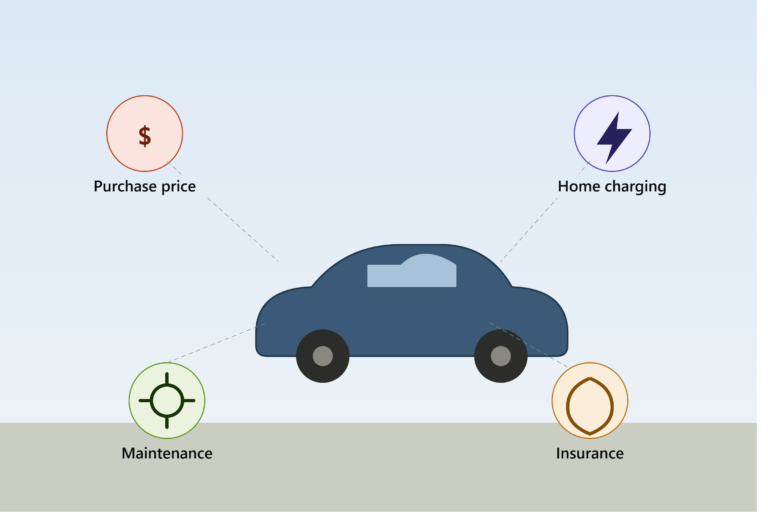
Electric vehicles still tend to cost more upfront than a comparable gas car. Battery packs remain the single most expensive component in an EV, and that cost gets passed on to the buyer at the dealership.
That gap has narrowed significantly over the last few years as battery production has scaled up and more manufacturers compete in the EV space. Still, expect to pay a premium of a few thousand dollars on many models when comparing sticker prices side by side.
[AD BREAK — insert in-content ad unit here]
Home charger installation
If you plan to charge at home, which most EV owners do, you will likely want a Level 2 charger installed in your garage or driveway. This is a separate cost from the vehicle itself.
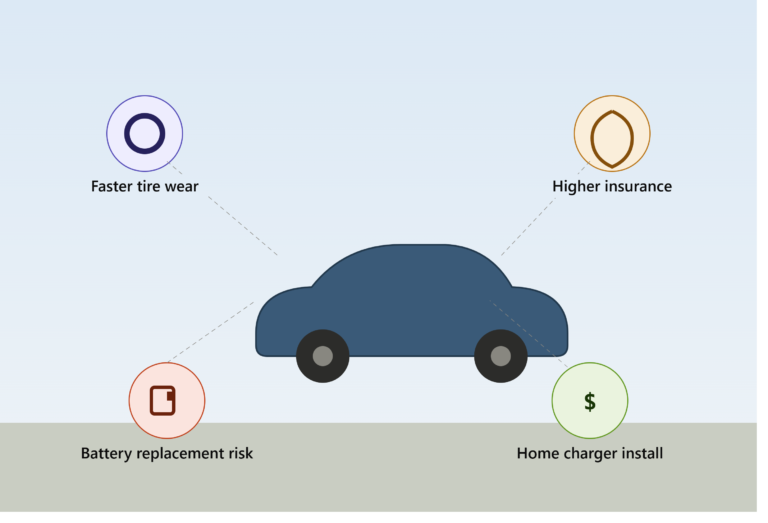
A typical Level 2 home charger installation runs between roughly $1,600 and $2,500 depending on your home’s electrical setup, the distance from your panel to the parking spot, and whether any panel upgrades are needed. Some utilities offer rebates that can cut this cost significantly, so it is worth checking with your local electric provider before you install anything.
Where EVs start saving you money
This is where the math starts to shift in the EV’s favor.
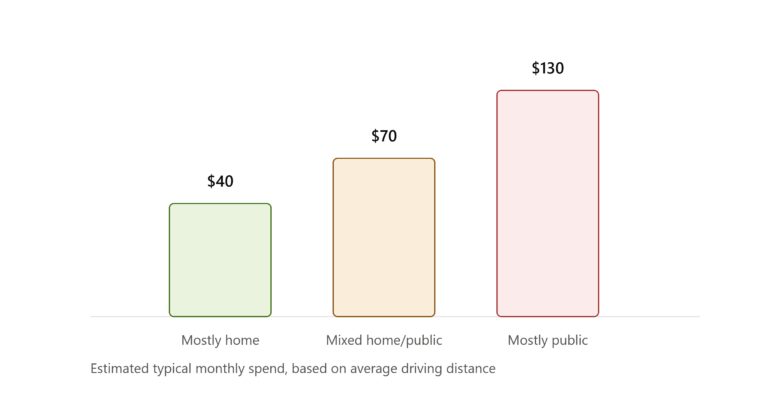
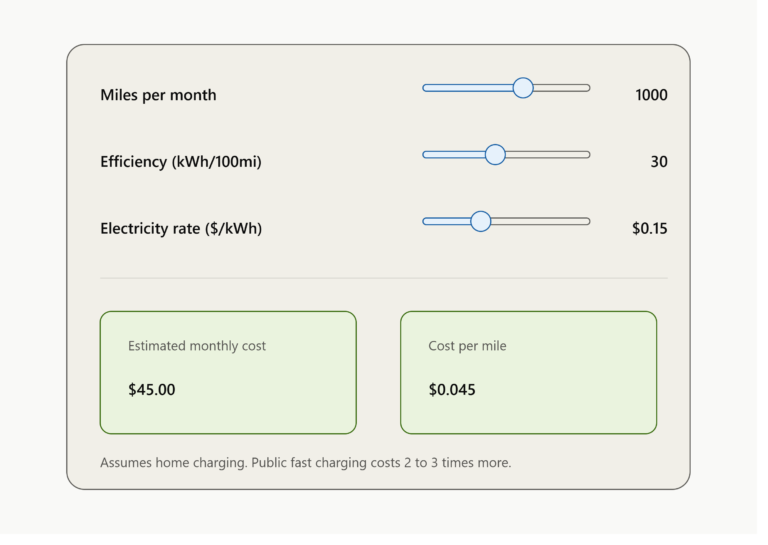
Fuel costs. Charging at home is consistently cheaper per mile than buying gasoline. At a typical home electricity rate, most EV owners spend meaningfully less per month keeping their car charged than they would spend filling a gas tank for the same amount of driving.
Maintenance. EVs have far fewer moving parts than gas cars. There is no oil to change, no transmission fluid, no spark plugs, and no exhaust system to maintain. Brake wear is also typically lower, since regenerative braking does much of the work. Over years of ownership, this adds up to real savings.
Time. This one is easy to overlook. No more trips to the gas station. If you charge at home overnight, your car is always ready in the morning.
Where the costs can catch owners off guard
Insurance. EV insurance premiums can run higher than a comparable gas car, largely because repair costs for EV-specific parts, including the battery pack, tend to be higher.
Tires. Electric vehicles are heavier than similar gas cars because of the battery pack, and they deliver instant torque. Both factors mean tires often wear out faster, so budget for more frequent replacements.
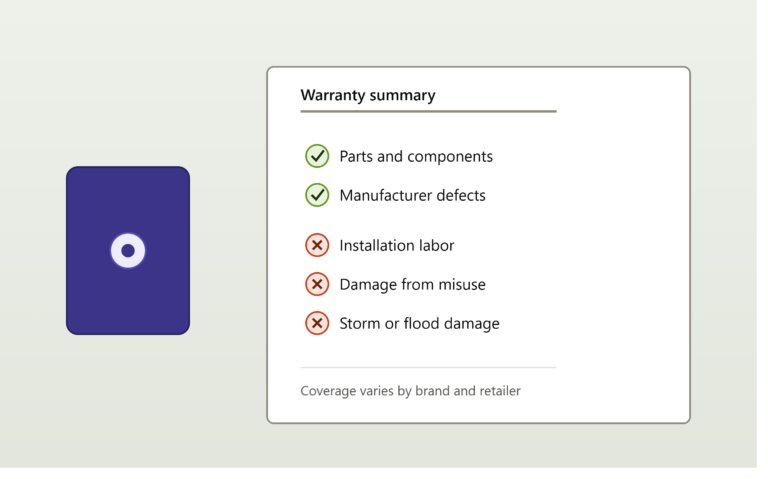
Battery replacement risk. Most EV batteries are covered by strong warranties, often 8 years or 100,000 miles. But if a replacement is ever needed outside that window, it is a significant expense. This risk is worth understanding before you buy, even if it is unlikely to affect most owners during typical ownership periods.
Does it add up to real savings?
For most drivers who put in average annual mileage and can charge at home, the answer over the full ownership period tends to be yes. The higher upfront cost is gradually offset by lower fuel and maintenance spending, often within a handful of years of ownership. Drivers who put in fewer miles per year or who cannot charge at home will see a slower payback, since public charging costs more and the fuel savings are smaller when you are driving less.
The bottom line
Electric vehicle ownership is not free, and it is not automatically cheaper than a gas car in every scenario. But for a typical driver with access to home charging, the combination of lower fuel costs, lower maintenance, and improving purchase incentives usually tips the scale in the EV’s favor over the life of the car. The key is running the numbers for your own driving habits rather than relying on a generic estimate, since your mileage, your local electricity rate, and your access to home charging all shape the final math.