The right questions, asked during the quote stage, are what separate homeowners who pay a fair price from those who spend thousands on unnecessary work. A car charger installation isn’t a standard outlet job — it involves a dedicated high-amperage circuit, a load calculation, and often manufacturer-specific requirements. Here’s exactly what to ask, and how to spot an answer that should give you pause.
Verify Credentials First, Before Discussing Any Technical Details
- “Are you licensed, bonded, and insured?” Verify this directly rather than taking a company’s word for it — most states let you check a contractor license number online in a few minutes.
- “Do you carry liability and workers’ compensation insurance?” This protects you specifically if something goes wrong during installation or a worker is injured on your property.
- “How often do you install EV chargers specifically?” Look for an electrician who does this work regularly, not occasionally as one of many general services — regular EV installers know code nuances, manufacturer requirements, and incentive paperwork that a generalist may not.
[AD BREAK — insert in-content ad unit here]
Ask for the Load Calculation, and Understand the Math Yourself
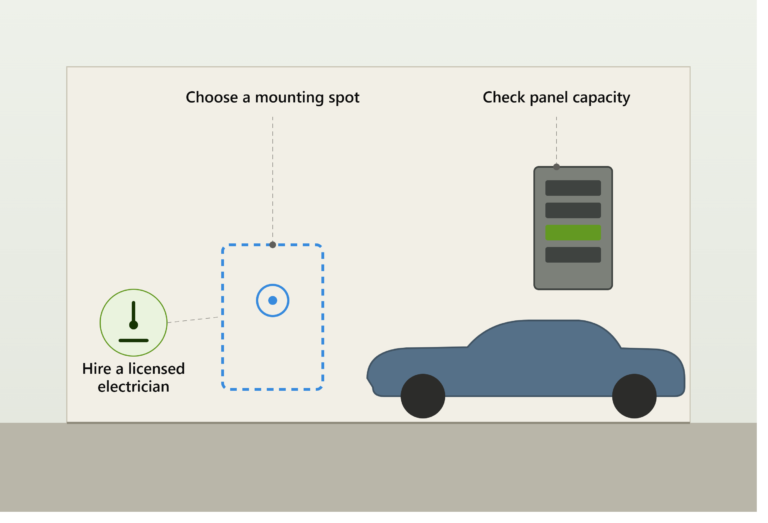
- “Will you perform a formal load calculation on my panel before recommending any upgrade?” This should be standard practice, not an optional add-on — it’s the documented basis for determining whether your panel genuinely needs additional capacity.
- “Can you show me the numbers, not just the conclusion?” If an electrician recommends a panel upgrade, ask them to walk through the actual calculation — your service size, existing major loads, and remaining headroom. If they can’t explain the math, or get defensive when asked, that’s meaningful information, not an unreasonable request.
This is the single most useful red flag test available to you: if your own rough estimate (or a low-cost independent load calculation service) suggests your panel has real spare capacity, but the electrician quotes a panel upgrade anyway without reconciling the discrepancy, get a second opinion before proceeding. A good electrician welcomes an informed homeowner asking questions — it’s not a “gotcha,” it’s how the work should be verified on a purchase this size.
Get a Line-Item Estimate, Not a Bundled Number
- “Can you break down the quote into materials, labor, permit fees, and inspection separately?” A single lump-sum number is much harder to compare across bids than an itemized one, and it hides where your money is actually going.
- “Does this quote include the full cost of the permit and inspection, or just labor and materials?” Some companies charge a separate, sometimes surprisingly high fee (in the $500-1,000 range in some cases) just to “handle the permit” — worth knowing upfront rather than discovering as a line item added later.
- Get 2-3 quotes minimum from different licensed electricians. This isn’t about distrust — it protects you from outlier pricing and gives you a genuine market baseline for your specific area and situation.
[AD BREAK — insert in-content ad unit here]
Ask About Charger Placement Before It’s Decided For You
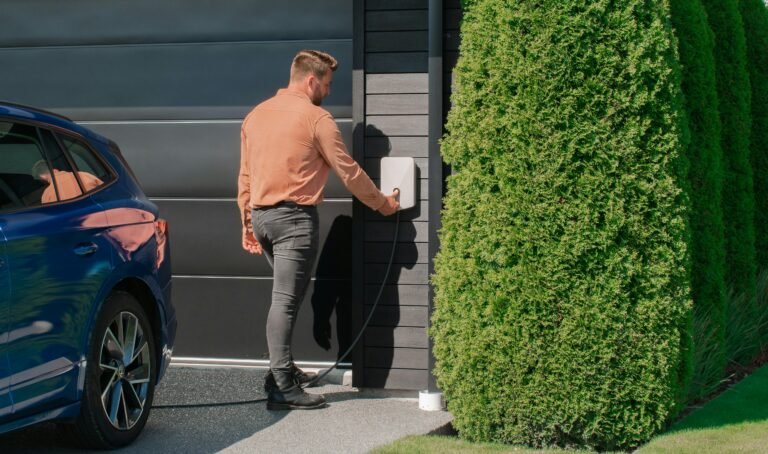
- “Where do you recommend mounting the charger, and why?” Installers sometimes default to the easiest location — right next to the panel — even if that placement makes daily charging genuinely awkward given how you actually park. Think through backing-in versus nose-in parking, where your specific vehicle’s charge port is located, and whether the cable will create a trip hazard before agreeing to a location purely because it’s the cheapest to wire.
- “How does distance from the panel affect the cost?” Every additional foot of conduit run adds material and labor — understanding this tradeoff helps you make an informed choice between the cheapest location and the most convenient one.
Confirm You’re Not Overpaying for Capacity You Don’t Need
- “What amperage circuit are you recommending, and does it match what my vehicle can actually use?” Paying for a 60A or 80A circuit when your EV’s onboard charger only accepts 32A or 40A won’t charge your car any faster — it just increases wire and breaker costs unnecessarily (see our guide on choosing the right amperage for the details). Make sure the recommendation is based on your actual vehicle’s specs, not just “bigger is safer.”
Ask About Warranty and Post-Installation Responsibility
- “How long do you warranty your workmanship?” This is distinct from the charger manufacturer’s own product warranty — ask specifically about the electrician’s labor warranty (see our guide on charger warranties for why this distinction matters).
- “If the inspector requires changes after the fact, will you handle those corrections at no additional cost?” A reputable installer should stand behind their work through the inspection process, not treat a failed inspection as a new billable job.
[AD BREAK — insert in-content ad unit here]
Confirm They Know Your Local Code Version
Electrical code updates happen periodically, and adoption timing varies significantly by state and municipality — a national code change doesn’t take effect everywhere simultaneously. Ask directly:
- “Which NEC (National Electrical Code) edition does my local building department currently enforce?” This determines which specific rules apply to your installation, and a good local electrician should know this without hesitation.
- “Are there any recent code changes relevant to my installation?” Requirements like GFCI protection specifics or panel labeling rules do get updated, and an electrician actively doing this work should be current on what applies in your jurisdiction right now.
A Practical Preparation Checklist Before Your Appointment
- Gather details on your major appliances (HVAC size, electric range specs) so the electrician can complete an accurate load calculation efficiently during the visit
- Know your specific EV model (or the one you’re planning to buy) and its maximum AC charging rate
- If you’re in an HOA or multi-unit property, have any required association approvals ready or in progress
- Write down your questions in advance rather than trying to remember them mid-conversation
Bottom Line
The questions that matter most all point toward the same goal: verifying that recommendations are backed by actual numbers, not just a contractor’s general instinct. Ask for the load calculation and the math behind any panel upgrade recommendation, get an itemized quote from at least two or three licensed electricians, confirm your circuit sizing actually matches your vehicle’s needs, and clarify workmanship warranty terms before work begins. None of this is about distrust — it’s the same due diligence any major home improvement purchase deserves.
This article is for general informational purposes. Verify electrician licensing and credentials directly through your state’s contractor licensing board before hiring.