“EV-ready” sounds like a clear, simple label — but it isn’t standardized in most real estate listings, and the term can mean anything from a fully functional charger already installed to a conduit stub with nothing actually wired yet. With EV-related listing terms appearing roughly 92% more often in 2025 than the year before, it’s worth knowing exactly what to verify before treating the label as a done deal.
The Three Tiers That Actually Matter (Most Listings Don’t Distinguish)
The U.S. Department of Energy uses three distinct technical categories for new construction, and understanding this hierarchy is the single most useful thing you can bring to evaluating a listing:
- “EV Capable”: the electrical panel has reserved capacity and there’s typically a conduit pathway roughed in, but no outlet or circuit has actually been installed yet. This is the lowest tier — it means future installation will be easier and cheaper, not that you can plug in tonight.
- “EV Ready”: a dedicated circuit and outlet (commonly a 240V outlet) have been installed and are functional, but there’s no actual charging equipment (EVSE) present. You’d still need to buy and plug in a charger, but no electrical work is required first.
- “EVSE installed”: an actual charging station is physically installed and ready to use immediately.
A listing that says “EV-ready” in casual marketing language could technically mean any of these three — and the gap between them is real money: going from “EV Capable” to actually charging can mean an additional $500-2,000+ in electrical work, while “EV Ready” means you’re just buying a charger.
[AD BREAK — insert in-content ad unit here]
Questions to Ask the Seller or Listing Agent Directly
Don’t take the “EV-ready” label at face value — ask specifically:
- “Is there an installed outlet, or just conduit/reserved panel space?” This single question separates “EV Capable” from “EV Ready” and tells you whether you’re looking at a $0 project or a several-hundred-to-low-thousands-dollar one.
- “What voltage and amperage is the outlet or circuit rated for?” A 240V/40A circuit supports genuine Level 2 charging; some listings describe a standard 120V outlet as “EV-ready,” which is technically true but delivers only Level 1 charging speeds.
- “Is there an actual charger (EVSE) included, or just the electrical infrastructure?” If a charger is included, confirm the specific brand and model, and check it against current reviews rather than assuming it’s a good unit.
- “Was this installed by a licensed electrician with a permit and inspection?” Ask to see the permit documentation — this matters for both safety and your own future resale, and its absence is a genuine red flag on a claim like this.
- “How far is the outlet or charger from the home’s electrical panel?” This affects whether any future capacity upgrades would be straightforward or expensive (see our guide on panel upgrade costs for how distance affects pricing).
Verify Panel Capacity Independently, Don’t Just Trust the Listing
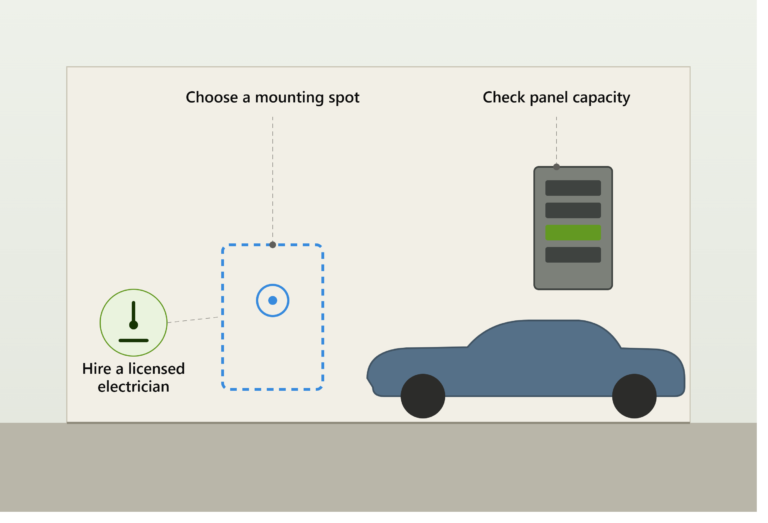
Even a genuinely installed EV outlet doesn’t guarantee your home’s panel has adequate spare capacity for how you plan to use it — especially if you’re planning a larger-battery vehicle, a second EV eventually, or pairing charging with solar and a home battery. Before finalizing a purchase based partly on EV readiness, it’s worth having your own inspector or an electrician confirm the panel’s actual service size and spare capacity independently, rather than relying solely on what the listing or seller states (see our guide on calculating your home’s electrical capacity for what to check).
[AD BREAK — insert in-content ad unit here]
Red Flags Worth Investigating Further
- A listing that says “wired for EV charging” with no further detail — this vague phrasing is exactly the kind of claim that turns out to mean “EV Capable” (conduit only) rather than a functional outlet, once you ask directly
- No mention of permits or inspection for electrical work that’s supposedly already done — unpermitted work is a real concern both for safety and because it can complicate your own future resale or insurance claims
- An outlet that’s technically present but inconveniently located relative to typical parking — far from where you’d actually park, or on the opposite side of the garage from your vehicle’s charge port location
- Charging equipment that’s outdated or from a brand with known reliability or software support issues (see our guide on smart chargers for which brands to be cautious about, including discontinued cloud services)
Context: New Construction May Already Be Required to Have This
If you’re looking at newer construction, especially in states adopting updated building codes, EV readiness may not be an optional selling point at all — it may be a code requirement. California’s building codes taking effect in 2026, for example, require EV charging infrastructure in most new residential parking spots, with multifamily developments required to provide at least one EV-ready spot per unit. If you’re shopping in a state with similar requirements, a newer home advertising “EV-ready” may simply be describing code compliance rather than a special upgrade — worth knowing so you don’t pay a premium for something that would have been required regardless.
Why This Is Worth Getting Right
Real estate data backs up why sellers lean into this label: homes with EV charging infrastructure have been shown to sell measurably faster (one widely cited analysis found roughly 10 days faster than comparable homes without it) and, as covered in our guide on EV chargers and home value, can command a modest price premium in markets with strong EV adoption. That’s exactly why the term shows up more in listings — and exactly why it’s worth verifying rather than assuming the marketing language reflects genuine, complete infrastructure.
A Quick Verification Checklist
- Confirmed whether the listing means “EV Capable,” “EV Ready,” or an actual installed charger — not just the word “EV-ready” alone
- Confirmed voltage/amperage of any installed outlet or circuit
- Asked whether a charger (EVSE) is included, and if so, its specific brand and model
- Requested permit and inspection documentation for any electrical work
- Independently verified panel capacity with your own inspector, especially if you have specific future charging plans
- Confirmed outlet/charger location is actually convenient for your parking situation
Bottom Line
“EV-ready” is a real, meaningful selling point when it’s backed by an actual installed circuit or charger — but it’s not a standardized term, and listings range from a fully functional setup to little more than reserved panel space. Ask the specific questions above rather than taking the label at face value, and treat permit documentation as your best evidence that the claimed work is real, code-compliant, and safe.
This article is for general informational purposes. Always verify electrical claims in a home listing independently through your own inspection before finalizing a purchase decision.