Most home EV chargers are rated for about 10 years of service — but that’s a baseline, not a ceiling. With consistent, fairly minimal maintenance, many owners get 15 years or more out of the same unit, while neglect can cut that lifespan roughly in half. Here’s what actually moves the needle.
The Cable Is Where Most Failures Start
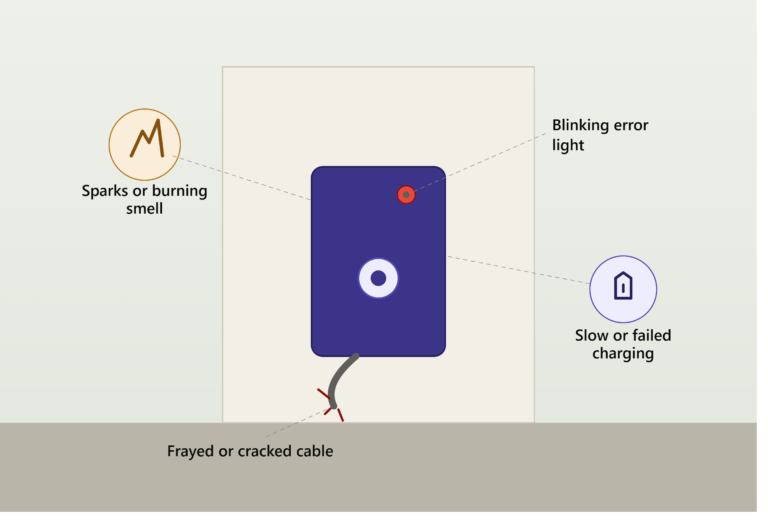
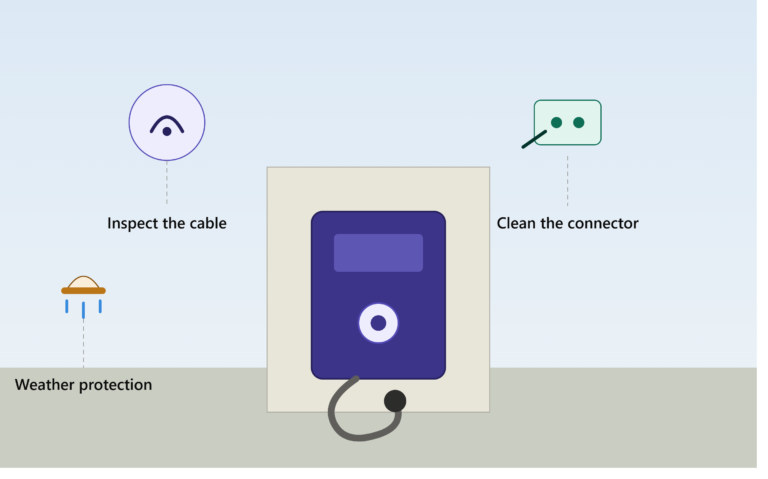
Across nearly every source on this topic, one point comes up consistently: the charging cable is the most handled part of the system, and physical wear on it is the single most common cause of charger failure. A few habits protect it:
- Never drag the cable across the ground — this wears down the outer jacket faster than almost anything else
- Avoid tight coiling or twisting during storage, which stresses the internal wiring over time even when the outside looks fine
- Use a proper cable holder or storage hook rather than leaving it piled on the floor — this reduces unnecessary strain and keeps it visibly organized, which also makes it easier to notice wear when it does occur
- Avoid sharp bends and kinks, especially near the connector ends, where repeated flexing concentrates stress
- Keep the connector covered when not in use — a cap or cover keeps dirt, moisture, and debris from contaminating the charging pins, which can affect both connection quality and, over time, safety
[AD BREAK — insert in-content ad unit here]
Clean It Regularly (It’s Easier Than You’d Think)
A simple weekly or monthly habit prevents most dirt-related issues:
- Wipe the exterior housing with a dry cloth to remove dust and debris
- For stubborn grime, use a mild detergent (dish soap diluted in water works fine) rather than harsh chemicals
- Check the connector and plug ends specifically — these accumulate dust and oils from repeated handling more than any other part of the unit
- For units with visible vents (common on higher-power chargers with active cooling), use a soft brush or compressed air every 3-6 months to clear dust, leaves, or debris that can block airflow — especially important in dusty or coastal environments, since blocked vents can lead to overheating and the charger automatically slowing itself down to protect its internals
Keep an Eye on Firmware Updates
Modern smart chargers are essentially small computers, and manufacturers regularly release firmware updates that improve efficiency, fix bugs, and maintain compatibility with newer vehicles:
- If your charger supports automatic updates, enable this feature and let it handle updates on its own
- If not, check for updates manually at least once a month through the manufacturer’s app
- If you’re not comfortable doing this yourself, a licensed electrician can handle it as part of a periodic maintenance visit
[AD BREAK — insert in-content ad unit here]
Avoid Overworking the Unit
Chargers generate heat during normal operation, and repeatedly pushing them past their intended duty cycle accelerates wear:
- Avoid back-to-back long charging sessions on multi-vehicle setups without a break — if you’re charging two EVs on the same unit or circuit, allow the cooling-down period recommended in your specific charger’s manual between sessions rather than running it continuously
- Don’t restrict airflow around the unit — if it’s mounted in a tight enclosure or against a wall with poor ventilation, that trapped heat has nowhere to go, which stresses internal components over time
Installation Location Matters More Than People Expect
Where you mount the charger affects its long-term durability as much as how you use it day to day:
- Shelter it from direct exposure to rain, snow, and extreme heat where possible — a garage or covered carport location extends component life noticeably compared to a fully exposed outdoor mount
- If outdoor mounting is unavoidable, prioritize a charger with a strong weatherproof rating (see our guide on chargers for cold climates for models built specifically for harsh outdoor conditions) rather than assuming any unit handles exposure equally well
Schedule Periodic Professional Inspection
Beyond what you can check yourself, an annual professional inspection catches issues that aren’t visible during routine cleaning:
- A licensed electrician can verify internal connections remain tight, check for any early signs of corrosion inside the housing, and confirm the circuit breaker and wiring are still performing to spec
- This is also a good opportunity to have firmware and any manufacturer-recommended maintenance items addressed in one visit, rather than waiting until something actually fails
Watch Your Energy Usage for Anomalies
Most smart chargers show energy consumption per session in their app — worth glancing at periodically. A sudden, unexplained jump in energy use for the same charging pattern can be an early signal of a developing electrical issue, either in the charger itself or in your home’s wiring, well before it becomes a more serious (and more expensive) problem.
Buy Quality From the Start
This isn’t strictly “maintenance,” but it’s the single biggest factor in long-term reliability: never buy a cheap, uncertified charger to save money upfront. Lower-quality units often use inferior internal components that are more prone to overheating and failure, and no amount of careful maintenance fully compensates for weak build quality from day one. Stick to UL-listed (or your region’s equivalent) models from established manufacturers (see our guide on the best home EV chargers for reliable options across price points).
A Simple Maintenance Schedule to Follow
| Frequency | Task |
|---|---|
| Weekly | Quick visual inspection of cable and connector; wipe down exterior |
| Monthly | Check for firmware updates if not set to automatic; check energy usage for anomalies |
| Every 3-6 months | Clean vents on units with active cooling (soft brush or compressed air) |
| Annually | Professional inspection by a licensed electrician |
Bottom Line
The gap between a charger that fails in 5 years and one that runs reliably for 15 mostly comes down to a handful of simple habits: treating the cable gently, keeping the unit clean, staying current on firmware, and not restricting its airflow or overworking it. None of this requires technical expertise — it’s closer to the kind of basic care you’d give any major home appliance, and it pays for itself by delaying a $500-1,500+ replacement for years.
This article is for general informational purposes. Contact a licensed electrician for any maintenance involving your charger’s internal wiring or electrical connections.