The good news first: roughly 80% of EV charging failures are fixed in under five minutes, and most don’t require an electrician. Here’s a systematic way to work through the problem, starting with the fastest checks first.
Step 1: The Single Fastest Diagnostic — Try a Different Charger
Before checking anything else, this one step saves the most time: plug your car into a different charger — a neighbor’s Level 2 unit, any nearby public Level 2 station, or even the Level 1 cable that came with your car. If your car charges normally elsewhere, the problem is your home charger, not your vehicle. If it still won’t charge anywhere, the fault is in the car itself. This single test separates roughly 95% of “charger problem” cases from “vehicle problem” cases in about ten minutes, and it determines everything about how you troubleshoot from here.
Step 2: Check the Physical Connection
The most common cause of a charger that seems completely dead is simply a connector that isn’t fully seated:
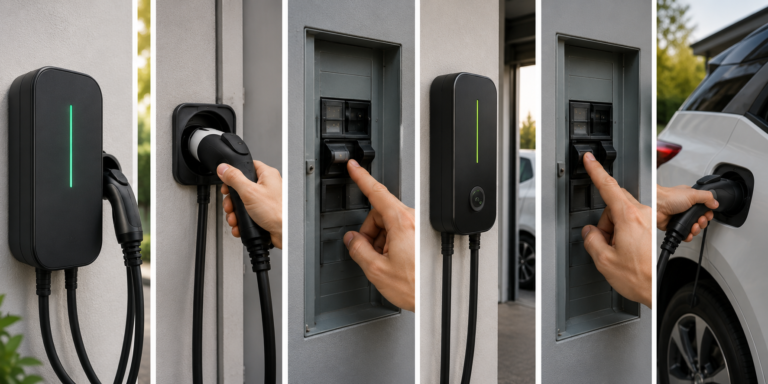
- Unplug the cable, wait about 30 seconds, then reinsert it firmly until you hear or feel it click into place
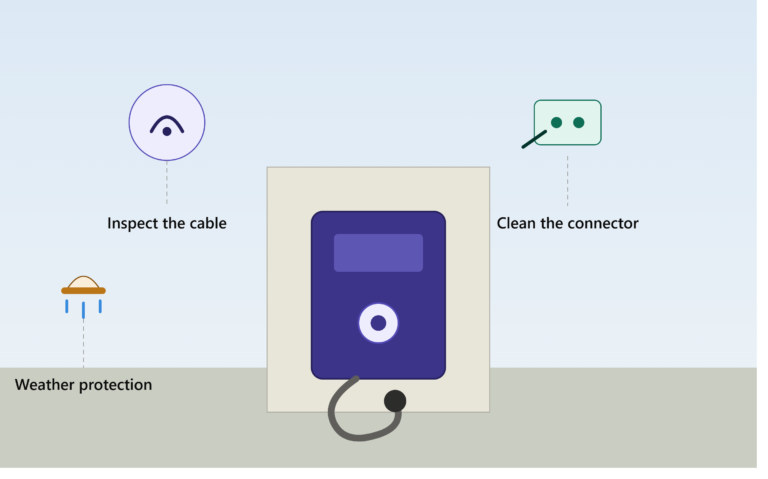
- Inspect the connector and port for debris, dust, or corrosion — dirt on the pins can interfere with the communication handshake between the charger and the car, even if the physical connection looks fine
- Confirm your car is actually in Park — most EVs won’t initiate charging in any other gear
- In winter, check whether the charging port is frozen — this is common enough that some owners keep a hairdryer in the garage specifically for this; use it on low heat, never anything hotter, directly on the port area
Step 3: Check Your Breaker and Power Source
If the connection looks fine but nothing happens at all:
- Check your electrical panel for a tripped breaker on the charger’s dedicated circuit — this is one of the most common causes and the easiest to fix
- If a power outage recently occurred, wait at least 30 minutes after power returns before attempting to charge. Your charger (EVSE) needs a full restart cycle to reconnect to the grid and reboot its internal electronics — trying to charge immediately after an outage is a common source of confusing, seemingly random failures
- If the breaker trips repeatedly rather than just once, stop trying to reset it and treat this as a signal to call an electrician — a breaker that won’t stay reset usually indicates a real electrical problem, not a fluke
Step 4: Check for Software and Connectivity Issues
If you have a smart, WiFi-connected charger:
- Confirm the charger is still properly connected to your home WiFi network — a dropped connection can interrupt scheduled charging even if the hardware itself is fine
- Check the manufacturer’s app for any pending firmware updates, and install them if available — updates frequently include bug fixes for exactly this kind of intermittent charging issue
- Try power-cycling the charger itself (unplug or switch off at the breaker for about a minute, then restore power) to force a software reset, which resolves many communication handshake failures between the charger and vehicle
Step 5: Check the Cable Itself
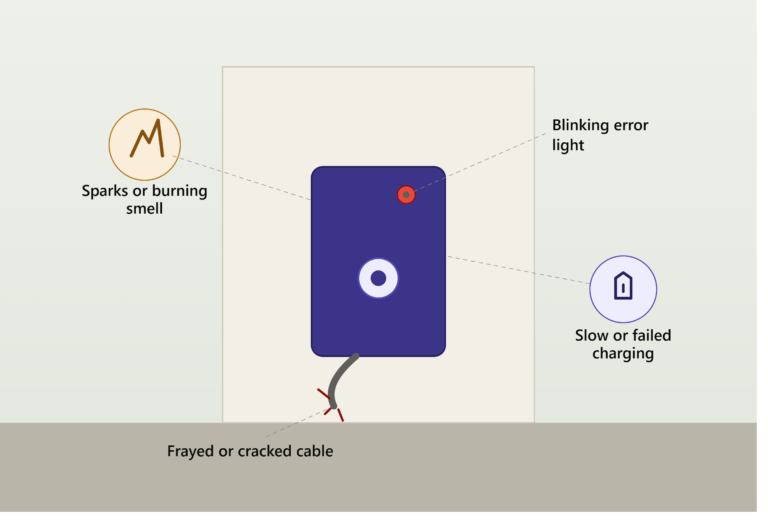
- Inspect the full length of the charging cable for cracks, fraying, or visible damage — don’t continue using a cable that shows physical wear, since this is both a performance issue and a genuine safety concern
- If the cable feels unusually warm or hot at any point along its length during a charging attempt, stop and don’t use it again until it’s inspected
- Make sure the cable isn’t kinked or under tension in a way that could be straining the connector ends
When the Problem Is Actually the Vehicle
If Step 1 confirmed the fault follows the car (it won’t charge anywhere), a few vehicle-side causes are worth knowing about:
- A dead or weak 12V battery is a surprisingly common cause of charging failure — separate from the high-voltage traction battery, EVs still rely on a small 12V battery to run onboard electronics, and when it’s low, the car sometimes can’t complete the “handshake” needed to start a charging session at all. This is more common than most owners expect and is often mistaken for a charger problem.
- Onboard charger (OBC) failure: this is a more serious, less common fault where the component that converts AC power to DC for the battery fails. The telltale sign is that AC charging (Level 1 and Level 2, both of which go through the OBC) stops working entirely, while DC fast charging — which bypasses the OBC — still works normally. This typically requires professional replacement, generally in the $1,500-3,500 range, and is a clear signal to contact a dealer or qualified EV technician rather than continuing to troubleshoot at home.
When to Stop Troubleshooting and Call a Professional
A few signs mean it’s time to bring in an electrician or the charger manufacturer rather than continuing DIY steps:
- A breaker that trips repeatedly even after resetting
- Any burning smell, visible scorching, or melted components anywhere in the charging setup
- A charger that passed all the steps above but still won’t reliably start a session
- AC charging that has stopped working while DC fast charging still functions (points to a vehicle-side OBC issue, not the home charger)
None of these are situations where persistence pays off — a charging system that runs at high current for hours every night doesn’t forgive an underlying electrical fault the way a lower-draw appliance might.
Preventing the Problem Next Time
A few habits meaningfully reduce how often these issues come up in the first place:
- Store the cable properly using a holster or cable management system when not in use, rather than leaving it on the ground where it can be stepped on or run over
- Keep connectors clean — periodically wipe down the plug and port area to prevent dust and debris buildup
- Keep firmware updated on smart chargers, since manufacturers regularly patch the kinds of software glitches described above
- Consider a dedicated or whole-home surge protector, which can help guard against the kind of power spikes that occasionally damage charging electronics
Bottom Line
Most EV charging failures trace back to something simple — a loose connector, a tripped breaker, or a charger that needs a restart after a power outage — and the fastest path to a fix is isolating whether the problem follows the car or stays with the charger before doing anything else. Reserve calling an electrician for repeated breaker trips, any sign of heat or damage, or a fault that persists after working through the basic steps above.
This article is for general informational purposes. If you’re ever uncertain about electrical safety during troubleshooting, stop and consult a licensed electrician rather than continuing to test the system yourself.