Most homeowners end up choosing between 32A, 40A, and 48A for a Level 2 home charger — and for the vast majority of daily driving, you don’t need the highest number on the shelf. Here’s how to figure out what your specific setup actually requires, without paying for capacity you’ll never use.
The Amperage Options at a Glance
| Charger amperage | Power output (240V) | Typical breaker needed | Best for |
|---|---|---|---|
| 16A | ~3.8 kW | 20A | Very light use, PHEVs |
| 32A | ~7.7 kW | 40A | Most daily drivers, most popular choice |
| 40A | ~9.6 kW | 50A | Higher daily mileage, future-proofing |
| 48A | ~11.5 kW | 60A | Large batteries, trucks, multi-EV households |
Two things to notice here. First, most homes can comfortably support up to 40A without major electrical work, which is why 32A and 40A chargers are the most common home installations. Second, the breaker size is always higher than the charger’s rated amperage — that’s not a mistake, it’s code.
Why the Breaker Is Always Bigger Than the Charger
EV charging counts as a “continuous load” under electrical code, because it draws power steadily for hours at a time — unlike a microwave or a hair dryer that runs briefly. Continuous loads require the circuit breaker to be rated at 125% of the charger’s maximum current draw. In practice:
- A 32A charger needs a 40A breaker
- A 40A charger needs a 50A breaker
- A 48A charger needs a 60A breaker
This isn’t optional or a “better safe than sorry” suggestion — it’s how the math is required to work so the circuit doesn’t overheat under sustained use.
Does Your Car Even Support Higher Amperage?
This is the detail that saves a lot of people money: your vehicle’s onboard charger sets the real limit, not just the wall unit. If your EV can only accept 32A (common on several models, especially rear-wheel-drive Teslas and some standard-range trims), installing a 48A charger won’t charge your car any faster — the extra capacity simply goes unused.
Before choosing an amperage, check your owner’s manual or manufacturer’s spec sheet for your car’s maximum AC charging rate. There’s no benefit to paying for capacity your car can’t accept today.
When 48A (or Higher) Actually Makes Sense
Most EV owners don’t need an 80A charger, and honestly, most don’t need 48A either. It tends to make sense in a few specific situations:
- You drive a truck or large SUV with a big battery (Ford F-150 Lightning, Rivian R1T/R1S) that can genuinely use the extra power to fully charge overnight
- You have two EVs charging on a shared circuit and want to minimize total charging time
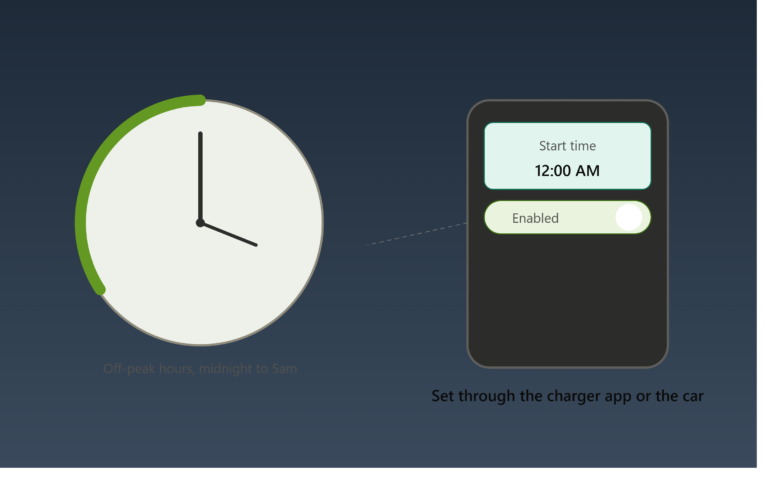
- You’re on a narrow off-peak electricity window and need to pack more charging into fewer cheap hours
- You’re future-proofing for a next vehicle you already know will support higher charging rates
Should You “Future-Proof” Even If You Don’t Need It Yet?
There’s a reasonable case for it, but it’s about wiring, not the charger itself. If an electrician is already running a new circuit to your garage, installing the heavier-gauge wire and larger breaker needed for 48A now — even if your current charger is only set to 32A or 40A — typically costs very little extra compared to doing the whole job again later. Retrofitting wiring after the fact costs considerably more than getting it right during the original installation.
Many chargers are also configurable, meaning the same physical unit can be set to output less than its maximum rating. That gives you flexibility to run it at 32A today and bump it to 48A later if your next vehicle can use it — without a second installation.
What About Your Home’s Electrical Panel?
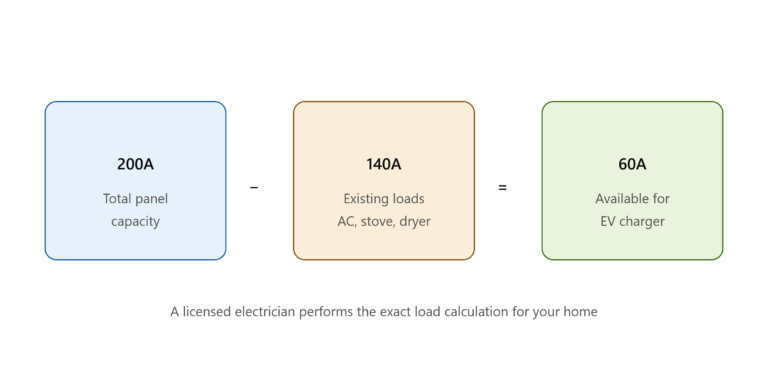
This is worth checking before you fall in love with a specific amperage. A licensed electrician will run a load calculation that looks at your panel’s total capacity, your main breaker rating, and what other large appliances (HVAC, electric range, water heater) are already drawing power. Most homes with a 200A panel have enough spare capacity for a 32-48A charger without needing a full panel upgrade — but older homes with 100A service, or homes already running several large electric appliances, sometimes need to go with a lower amperage, or invest in a panel upgrade to support higher charging speeds.
Bottom Line
For the majority of U.S. drivers covering 30-50 miles a day, a 32A or 40A charger on a properly sized circuit is enough to fully recharge overnight without any real compromise. Reserve 48A for large-battery vehicles, multi-EV households, or genuine future-proofing — and always let a licensed electrician confirm what your specific panel and wiring can support before you commit to a number.
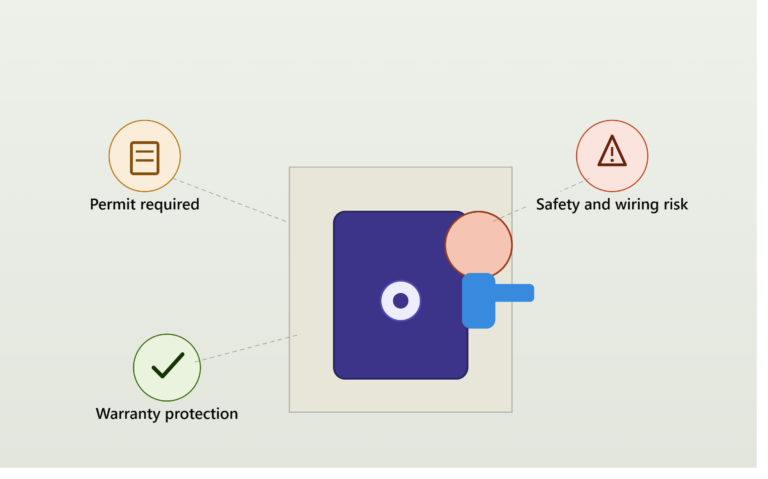
This article is for general informational purposes. Electrical requirements vary by home, vehicle, and local code — always have a licensed electrician confirm your specific panel capacity and circuit sizing before installation.