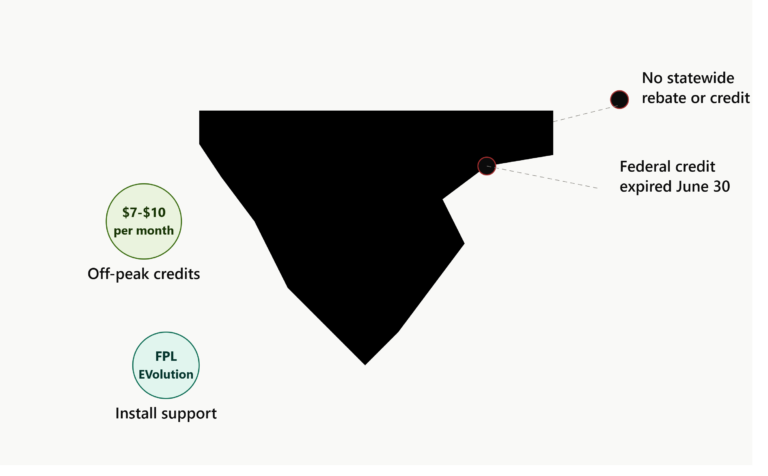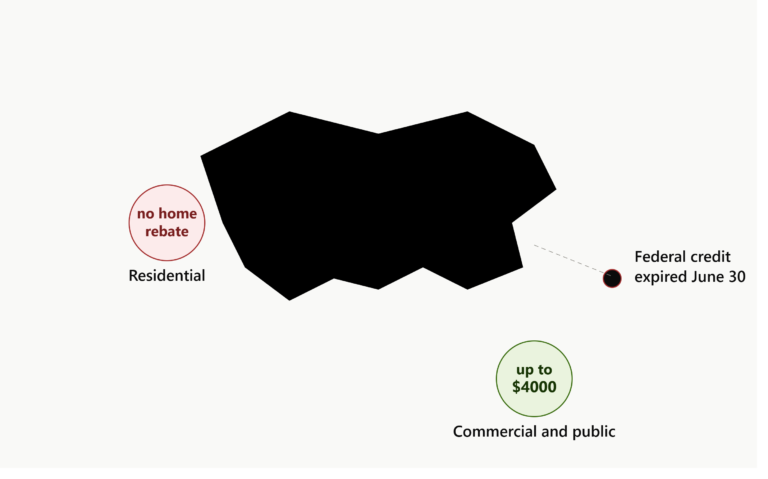
Illinois doesn’t have a statewide charger tax credit, but ComEd runs one of the more substantial utility rebate programs in the country — up to $3,750 toward a home Level 2 charger. The catch is that it comes with real strings attached that other states’ programs don’t require. Here’s the full picture.
The State-Level Reality
Illinois has no standalone statewide tax credit for EV chargers. What exists instead is a combination of utility rebates (primarily ComEd, with more limited options through Ameren) and, separately, the state’s EV purchase rebate program under the Climate and Equitable Jobs Act (CEJA) — which applies to buying a vehicle, not installing a charger, and is worth knowing about even though it’s a separate program from what this article focuses on.
ComEd: The Strongest Program in Illinois, With Conditions
ComEd, which serves roughly 4 million customers in northern Illinois including Chicago, offers a residential rebate ranging from $1,000 to $3,750 for installing a Level 2 charger — with the full $3,750 reserved for customers who qualify for public assistance programs. As part of a broader $70 million EV investment for 2026, more than $4 million is specifically earmarked for residential chargers.
This is a genuinely strong rebate by national standards, but it comes with requirements that are stricter than most state or utility programs covered elsewhere:
- Property type: single-family homes or multi-family residences with two units or fewer — larger multi-unit buildings don’t qualify under this specific residential program
- Smart/networked charger required: the unit must be a qualifying smart Level 2 charger (popular eligible models include the ChargePoint Home Flex, Tesla Wall Connector Gen 3+, and Emporia Smart EV Charger — verify your specific model against ComEd’s current approved list before purchasing)
- Certified installer: installation must be performed by an Illinois Commerce Commission (ICC) certified EV Service Provider, not just any licensed electrician
- Rate plan enrollment commitment: you must enroll in ComEd’s Hourly Pricing plan (or a similar time-of-use plan) and stay enrolled for at least three years — this is the detail that catches people off guard, since it’s an ongoing commitment, not a one-time condition at installation
- Purchase timing: charger must have been purchased on or after February 1, 2024
Why the Rate Plan Requirement Is Actually a Good Deal (Usually)
ComEd’s Hourly Pricing plan uses real-time wholesale electricity market prices rather than a flat rate. During typical off-peak overnight hours (roughly 10 PM to 6 AM), market prices have averaged 7-8 cents/kWh — close to half the standard flat residential rate of around 15.8 cents/kWh. For EV owners who can reliably schedule overnight charging (which most modern EVs and chargers support natively), this rate structure is genuinely one of the better deals in the Midwest, and the three-year enrollment requirement tied to the rebate is less of a burden than it might initially sound, since most EV owners who’d want a rebate in the first place are exactly the households who benefit most from this rate plan.
The real risk: Hourly Pricing rates are variable, and prices can occasionally spike during genuine grid stress events. If your household can’t reliably shift charging (and other major loads) away from peak hours, a flat-rate plan might actually serve you better despite forgoing the rebate — worth running your own numbers before committing to three years on a variable plan.
A New Rate Option Worth Checking: ComEd DTOD
Effective June 1, 2026, ComEd introduced a Delivery Time of Day (DTOD) rate option alongside its existing Hourly Pricing plan, giving customers another time-variant structure to compare. If you’re evaluating rate plans as part of your rebate application, it’s worth comparing DTOD against Hourly Pricing directly with ComEd, since which one saves you more depends on your specific charging schedule and overall household usage pattern.
Ameren Illinois (Central and Southern Illinois)
Ameren’s residential EV support leans more toward ongoing rate savings than a large one-time rebate — time-of-use rate plans and monthly bill credits or per-kWh savings for off-peak charging, rather than a ComEd-style upfront installation payment. If you’re an Ameren customer, check their current EV program page directly for specifics, since the structure and amounts differ meaningfully from ComEd’s approach.
Smaller Municipal Programs
A few Illinois municipalities run their own modest rebates on top of (or instead of) utility programs:
- Naperville: up to $500 for Level 2 or DC fast charger installation, for both home and business owners — requires a City of Naperville building permit and a completed Residential Load Calculation Worksheet for any wiring upgrades
- Batavia: $500 rebate for home charger installation
These are worth checking specifically if you live in one of these municipalities, since municipal programs sometimes stack with your utility’s rebate — confirm current stacking rules with each program before assuming both apply.
What Happened to the Federal Credit
The federal Section 30C home charger tax credit (30% of installation cost, up to $1,000, in eligible census tracts) applied to qualifying Illinois addresses, but it expired for installations placed in service after June 30, 2026 — that deadline has now passed. If your installation was completed before that date, you can still claim it using IRS Form 8911 on your return for that tax year (see our full federal home charger credit guide for the filing process). For installations happening now, ComEd and Ameren’s own programs are your primary options.
Condo Owners Are Protected by State Law
If you live in a condo, Illinois law is on your side: the Illinois Condominium Property Act was amended specifically to prevent condo associations from prohibiting EV charger installation in an owner’s designated parking space. Associations can still set reasonable installation requirements, but a flat prohibition isn’t legally enforceable.
A Separate Program Worth Knowing: The State EV Purchase Rebate
Distinct from charger installation, Illinois runs a vehicle purchase rebate under CEJA through the Illinois EPA — historically offering meaningful amounts toward new and used EV purchases, with an additional bonus for income-qualified buyers. This program operates on funding cycles that open and close based on annual appropriations, and application windows have closed and reopened multiple times as funding is exhausted and replenished. If you’re shopping for the vehicle itself (not just the charger), check the Illinois EPA’s current program status directly, since whether a cycle is open changes throughout the year and shouldn’t be assumed based on older articles.
Frequently Asked Questions
Do I have to use ComEd’s specific approved charger list to get the rebate? Yes — the rebate requires a qualifying smart/networked Level 2 charger. Confirm your specific planned model against ComEd’s current approved equipment list before purchasing, since buying an unlisted model could disqualify you even if it’s a perfectly good charger.
What happens if I cancel the Hourly Pricing plan before three years? This isn’t something to test — the enrollment commitment is a condition of receiving the rebate, so canceling early risks having to repay some or all of the rebate amount. Confirm the exact clawback terms directly with ComEd before enrolling if you’re at all unsure about staying on the plan long-term.
Is Ameren’s program as generous as ComEd’s? Based on current program structures, no — Ameren’s residential EV support is centered on ongoing rate savings rather than a large one-time installation rebate comparable to ComEd’s up to $3,750. Ameren customers should still check current offerings directly, since utility programs are updated periodically.
Can I combine a municipal rebate (Naperville, Batavia) with ComEd’s rebate? Possibly, but don’t assume — confirm current stacking rules with both programs directly, since utility and municipal rebate stacking policies vary and can change.
Bottom Line
ComEd customers in northern Illinois have access to one of the strongest charger rebates in the country (up to $3,750), but it requires a smart charger, certified installer, and a three-year commitment to a time-of-use rate plan — read the fine print before applying, since this isn’t a simple one-time payment. Ameren customers and those in smaller municipalities have more modest but still genuine options. Either way, confirm current program funding and terms directly with your utility, since Illinois’s EV incentive landscape has changed multiple times over the past two years and is likely to keep evolving.
Utility rebate programs, amounts, and eligibility requirements change frequently. Verify current program status directly with ComEd, Ameren, or your municipal utility before making installation decisions.