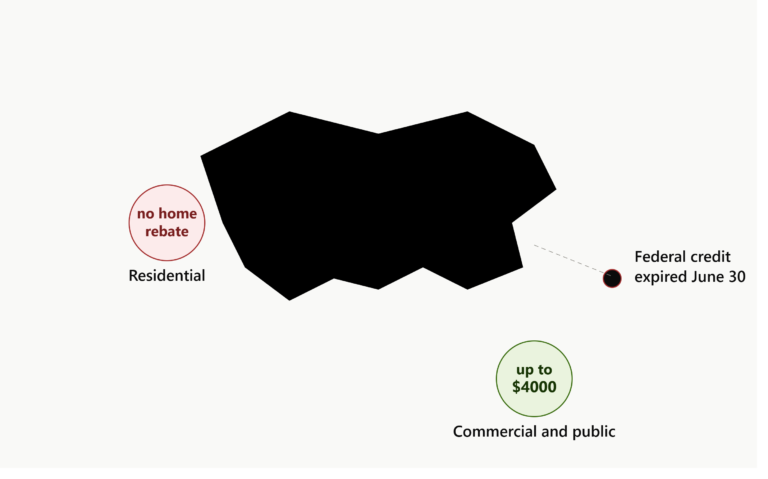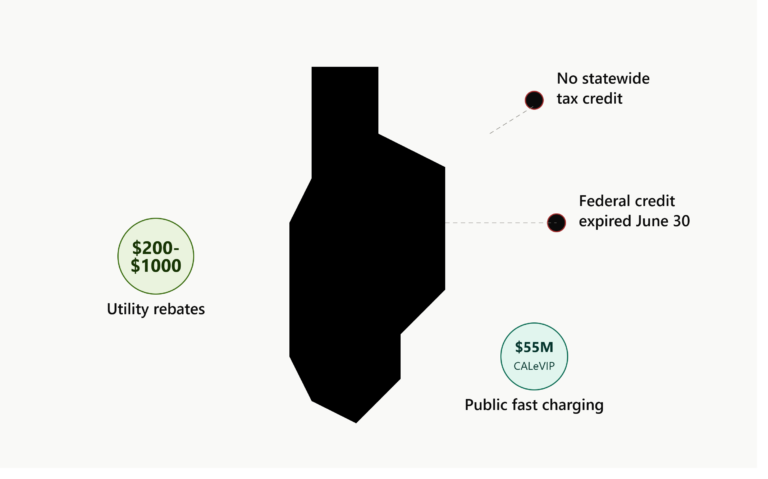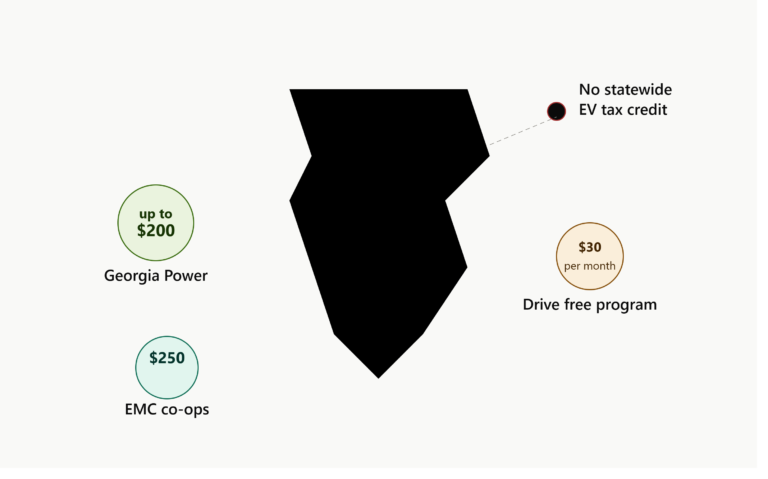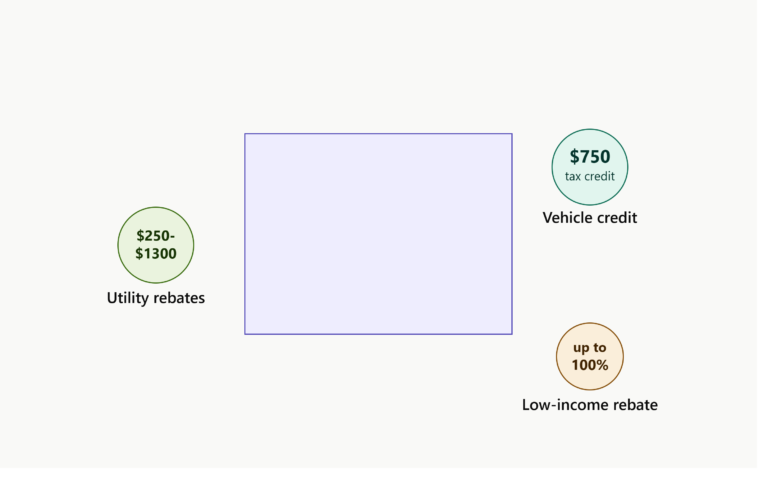
Texas has no statewide EV charger rebate program — but that doesn’t mean there’s nothing available. What exists instead is a patchwork of utility-specific programs that vary dramatically depending on exactly where you live, and understanding why requires understanding a quirk of how Texas’s electricity market actually works. Here’s the complete picture, utility by utility, plus what’s changed now that federal incentives have expired.
Why Texas Incentives Work Differently Than Other States
Most of Texas operates under a deregulated electricity market (ERCOT), which splits your electricity relationship into two separate companies:
- TDU (Transmission and Distribution Utility) — the company that owns the physical poles, wires, and meters in your area (Oncor in Dallas-Fort Worth, CenterPoint Energy in Houston, AEP Texas in parts of the state)
- REP (Retail Electric Provider) — the company you actually choose and pay for your electricity plan (TXU, Green Mountain Energy, and dozens of others compete for your business)
This split matters because EV charger rebates in Texas typically come from municipal or cooperative utilities that aren’t part of the deregulated system (Austin Energy, CPS Energy in San Antonio) rather than from the TDUs or REPs most Texans deal with. If you’re in Oncor or CenterPoint territory, there’s currently no residential charger rebate through your TDU — your options depend on which REP you choose and any city-specific programs where you live.
Utility-by-Utility Breakdown
Austin Energy — The Strongest Program in Texas
Austin Energy’s residential EV charger rebate stands well above anything else offered in the state: it covers 50% of the cost to purchase and install a qualifying Level 2 charger, up to $1,200. Austin Energy distinguishes between OCPP-compatible smart chargers (Open Charge Point Protocol, which lets the utility manage grid load by adjusting charging speeds during peak demand) and standard models — confirm which category your planned charger falls into before applying, since it can affect your rebate eligibility or amount.
Austin Energy serves the City of Austin and portions of Travis, Williamson, and Hays counties, though some areas within greater Austin are served by Pedernales Electric Cooperative, Oncor, or other providers instead — check your actual electricity bill to confirm which utility serves your specific address before assuming this program applies to you.
CPS Energy (San Antonio)
CPS Energy runs a multi-part FlexEV program rather than a single rebate:
- FlexEV Smart Rewards: a $250 bill credit for installing a smart Level 2 EV charging station
- FlexEV Off-Peak Rewards: a $125 bill credit for charging during off-peak hours, plus an additional $10/month bonus credit for households that limit peak-hour charging to twice a month or less
- FlexEV Public Charging: unlimited access to CPS’s public charging network for a flat annual fee of $96 per EV — worth considering if you supplement home charging with public stations regularly
Entergy Texas and SWEPCO
Both offer a straightforward $250 rebate for installing a qualifying Level 2 charger — Entergy requires simply a Level 2 unit, while SWEPCO specifically requires an ENERGY STAR-certified charger. Smaller than Austin Energy’s program, but a genuine reduction in installation cost if you’re in either service territory.
El Paso Electric
Offers a smaller $125 credit, along with an EV-Ready pilot program in West Texas that includes Take Charge TX (charging-as-a-service infrastructure support) and EV Smart Rewards, a managed charging program offering monthly bill credits for consistent overnight charging.
Where There’s Currently Nothing: CenterPoint, Oncor, and AEP Texas
If you’re served by one of Texas’s largest TDUs, it’s worth knowing upfront: CenterPoint Energy (Houston area), Oncor (Dallas-Fort Worth area), and AEP Texas currently offer no residential EV charger rebate. This is a direct consequence of the TDU/REP split described above — these companies manage the wires, not typically the incentive programs. If you’re in one of these territories, your best options are shopping REP plans for EV-friendly rates (below) and checking whether your specific city runs its own separate program.
The REP Advantage: Shop for Free Overnight Electricity
Because Texas’s retail electricity market is deregulated, residents can shop among competing REP plans — and several specifically target EV owners with free or heavily discounted overnight electricity. Green Mountain Energy and TXU have periodically run “free nights” plans where electricity between certain overnight hours (commonly midnight to 6 AM) costs $0, which can make home charging essentially free if your schedule aligns with the window. Use the state’s Power to Choose comparison tool to check current plans available at your address — this is arguably a bigger lever for Texas EV owners than any single rebate, since it applies to every kWh you charge, not a one-time installation credit.
What Happened to State-Level Vehicle Incentives?
Texas previously offered the TCEQ Light-Duty Purchase Incentive (LDPLIP), a $2,500 rebate for new light-duty electric vehicles. This program’s funding was depleted in late 2025, and TCEQ stopped accepting new EV applications as of spring 2026 — it’s no longer available for 2026 purchases. This is a vehicle purchase program, not charger-specific, but worth knowing if you’ve seen it referenced in older Texas EV guides that haven’t been updated.
What Happened to Federal Incentives
The federal home charger tax credit (Section 30C, 30% of installation cost up to $1,000) applied to eligible Texas addresses in eligible census tracts, but it expired for installations placed in service after June 30, 2026 — that deadline has now passed. If you completed your installation before that date, you can still claim it on your tax return using IRS Form 8911 (see our full federal home charger credit guide for the filing details). For installations happening now, that federal discount is no longer part of the equation — Texas homeowners installing today should budget based on utility programs and REP rate plans alone, not an assumed federal credit.
One More Thing Worth Knowing: HOA Protection
If you live in a homeowners association-governed community, Texas law is on your side: Texas Property Code Section 202.023 prohibits HOAs from restricting EV charger installation in a homeowner’s own parking space. Associations can still adopt reasonable rules governing the installation (aesthetic guidelines, safety requirements), but they cannot flatly prohibit it — worth knowing if you’ve been hesitant to raise the topic with your HOA.
Frequently Asked Questions
Do I qualify for a rebate if I don’t live in Austin or San Antonio? Possibly, but check directly — smaller programs exist through Entergy and SWEPCO, and it’s worth checking whether your specific municipal utility or cooperative runs a program not covered in general roundups, since many aren’t widely advertised.
Can I stack a utility rebate with anything else? The federal 30C credit could previously be combined with Austin Energy’s rebate for a combined 65%+ offset on a typical installation — but since 30C has expired, current stacking mainly means combining a utility rebate with a favorable REP overnight rate plan, which isn’t a one-time rebate but does reduce your ongoing cost meaningfully.
Does Texas have a state income tax credit for EVs or chargers? No — Texas has no state income tax, so state income-tax-based credits (common in other states) simply don’t exist as a mechanism here. All Texas incentives come through utilities, municipal programs, or (previously) direct grant programs like the now-closed LDPLIP.
How do I find out if my specific utility has a program not listed here? Check your utility’s website directly, or call their customer service line and ask specifically about “EV charger rebate” or “FlexEV”-style programs — Texas utility programs change and launch throughout the year, and smaller cooperatives in particular don’t always show up in broader search results.
Bottom Line
Texas’s EV charger incentive landscape depends heavily on exactly where you live: Austin Energy customers have access to the strongest program in the state (up to $1,200), CPS Energy customers in San Antonio get a multi-part rewards program, and customers of the state’s largest TDUs (CenterPoint, Oncor, AEP Texas) currently have no dedicated charger rebate at all. Regardless of your utility territory, shopping REP plans for free or discounted overnight electricity is worth doing — it’s the one lever available to nearly every Texas EV owner, and it can outweigh a one-time rebate over the life of your ownership.
Utility rebate programs, amounts, and eligibility change frequently. Verify current program status directly with your specific utility or municipal provider before making installation decisions.